
Poetry in educational institutions
We’ve all been there. Sitting in class in school, listening to the teacher rattle on about a work of poetry, and how when the poet said this, they actually meant this. And thinking surely, if the poet meant that, they would have simply said it? Analysing poetry is not inherently a bad thing, but the memories I and many of us have of doing poetry in school is not a fond memory. It is one of how poetry was not something we did, but rather something that was done to us.
I have a very clear memory of being sent to the back of the classroom to learn a poem off by heart that I had not correctly learned as was assigned for homework, and then having to recite it at the top of the room in front of everybody. Did this make me like poetry? No. It made me loathe it.
Joseph Coelho at the Bookseller Children’s Conference
Waterstones Children’s Laureate Joseph Coelho (2023) said at the Bookseller Children’s Conference that he has spoken to teachers about this subject, with many saying poetry is a part of teaching that they struggle with. He claimed that by forcing people to analyse poetry, we are turning them off it and that when someone has the opportunity to be a poet, they come alive.
“If your only introduction to poetry is to analyse it, that might turn you off”
Joseph Coelho, The Bookseller Children’s Conference (2023).
So, Joseph Coelho in his first project as Children’s Laureate has worked with publishers to help children to find their voice, in creating “poetry prompts” – a series of short video resources.1 They come along with a poster “I am a poet” for parents, guardians and educators to put on the wall and surround by children’s own poems so that they can see themselves as the poets they are.2 Not only does this facilitate children feeling included in the world of poetry; it means that poetry is not just something they must consume, which as Joseph spoke about, can be intimidating, particularly for those with literary issues. Within the contemporary fiction industry, diversity and inclusion is essential, and Joseph’s poetry prompts includes people of all backgrounds and from different parts of the world. These resources offer a time-efficient way for educators to teach about poetry, given that constraints within schools may impact children’s enjoyment of poetry. Research says that poetry writing helps children’s mental well-being and helps them express feelings and struggles. (Clarke, Bonafede & Chamberlain, 2023).
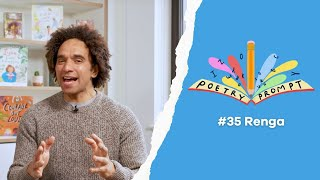
Diversity and reaching an international audience
These resources help educators and parents to have poetry be something children can enjoy, given the important role these caregivers have in introducing poetry to children. By speaking at conferences such as The Bookseller Children’s Conference and others events, as well as communicating with educational institutions, Joseph is able to reach that audience. He has aided with the enjoyment of poetry from children hugely across the UK, as well as beyond the UK, reaching international audiences with diverse themes and people.
Poetry does not have to be something to consume and analyse, full of hidden meanings and secrets that the child is forced to work to decipher. Instead, they can become the poet, and in doing so, they will be led not just to be a writer, but to also read.
“Kids that write, read.”
Joseph Coelho, The Bookseller Children’s Conference
Bibliography
- https://www.booktrust.org.uk/what-we-do/childrens-laureate/poetry-prompts/#!?q=&sortOption=MostRecent&pageNo= ↩︎
- Illustrated by Joelle Avelino, 2022 ↩︎
Clarke, Bonafede & Chamerlain. (2023). Children and young people’s engagement with poetry, 2023. National Literacy Trust. Accessed: https://nlt.cdn.ngo/media/documents/Poetry_in_2023.pdf
Coelho, J. (2023). Waterstones Children’s Laureate. The Bookseller Children’s Conference. County Hall, Waterloo. Accessed virtually: 27/09/23.

