Whose stories shape our understanding of the world- and whose are missing?
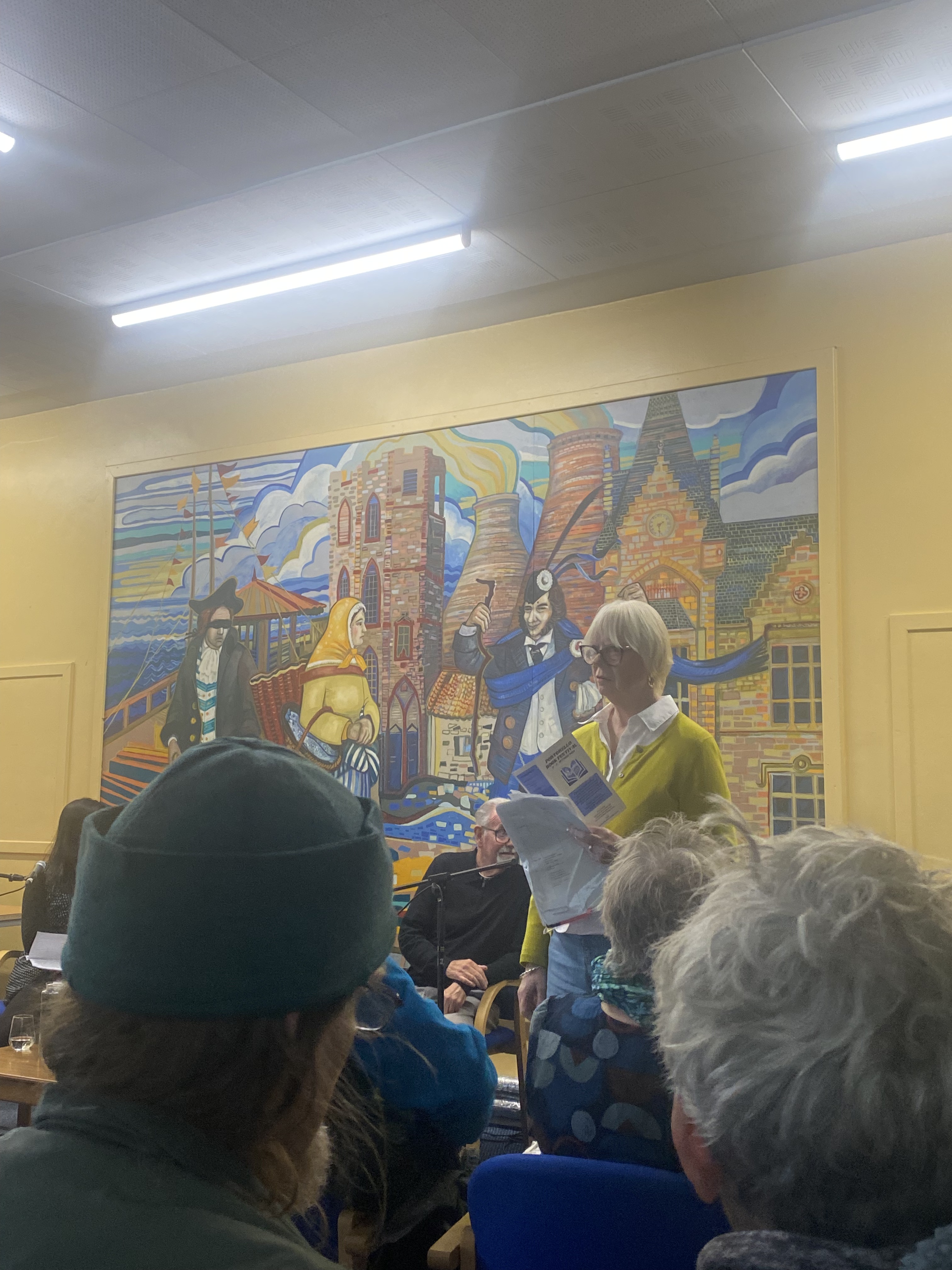
Photo taken by Lucy Horton at the Portobello Book Festival 2025, October 3.
That was the question posed to a small upstairs room in the Portobello Library on a dreary October afternoon, as we settled into the ‘Unheard Voices’ panel at this year’s Portobello Book Festival.
This session was chaired by Debbie Menezes of Social Action Enquiry Scotland, who urged us to dissect our own self-absorptions,
‘We’ve all had moments when our voices were silenced,’ she said. ‘And just as often, we’ve missed the quiet truths spoken by those beside us,’ (2025)
She introduced the speakers with a prompt to us all: Who’s missing? (2025)
Mark Baillie spoke first, as he shared highlights from his 2019 novel Salvage, a historically informed tale of Scotland’s Gypsy-Travellers and their children who were forcibly taken from them. By weaving memory, trauma, and truth, Baillie aims to patch the holes in Scottish history and governmental memory. Reflecting on the moral tradition in storytelling, he explained he wanted his book to be known as ‘not just historical fiction but a moral act … a reckoning with how we remember, and who we have chosen to forget’ (2025)
Next to speak was Stephen Christopher, a writer and playwright, representing Letters from Lockdown (2020), a collection of creative writing written by a group pf people in recovery from substance addiction, himself one of them. The collection began during the pandemic through Edinburgh Recovery Activities in the hope of turning isolation into a safe space for creative collaboration. Christopher’s words and his retelling of his journey to becoming a playwright was raw, humorous, and filled with resilience. Trauma wasn’t centred, but instead imagination was celebrated as a means to help others find their voices, as he found ‘creativity is agency’ (2025). His story is a reminder that marginal narratives are not to be defined as tragic, but to be testimonies of community.
Last to speak was Jim Aitken, a tutor and editor of Windows to Our Past, who shared how he has collaborated with North Edinburgh residents in order to create a physical collection of their memories. Their stories of work, family, and local change are both nostalgic and lucid as the residents’ tales aim to redefine their home lives outside of statistics and policy.
As Aitken spoke of the community storytelling circles that were fostered, I found myself reminiscing about my childhood afternoons at Tottington Library – sitting crossed-legged in the story corner with other snotty children listening to a librarian’s animated voiced. Every conversational circle I’ve entered into since can be seen as a small act of belonging, where a thread of story has been spun between all participants. And my childhood feeling of contented drowsiness returned to me in the Portobello Library that night as we were all gathered in another story circle bound by curiosity and care.
As the evening closed, Menezes offered one final invitation:
‘Whose voices are we still not hearing, and how can we make space for them?’. (2025)
This event reminded me of the importance of stepping back amd resisting the urge to fill every silence and instead offering space for others’ stories to unfold.
Bibliography
Aitken, J. Baillie, M. Christopher, S. (2025). ‘Unheard Voices’ Chaired by Debbie Menezes, Portobello Book Festival. 4 October. Edinburgh.
Portobello Book Festival, (2025). Available at: https://portobellobookfestival.com/2025/09/05/the-2025-portobello-book-festival-programme-is-now-available/ [Accessed 18 October 2025]
 MSc Publishing – Industry Accredited Postgraduate Degree