
As a child, the library was a cornucopia of stories, somewhere my mum could let me explore and roam (quietly, of course). In high school, it was where I developed my adoration of old, used, slightly fusty books, those books that were cracked at the spine, pages yellowed, stamped over and over and over again, their plastic jackets close to crumpling in my hands. Now, as a publishing student, it’s where I go to prep myself for assignments and find clarity in chaos. The library has always been a place of community, education and excitement, but these staples of our literary landscape are slowly falling apart.
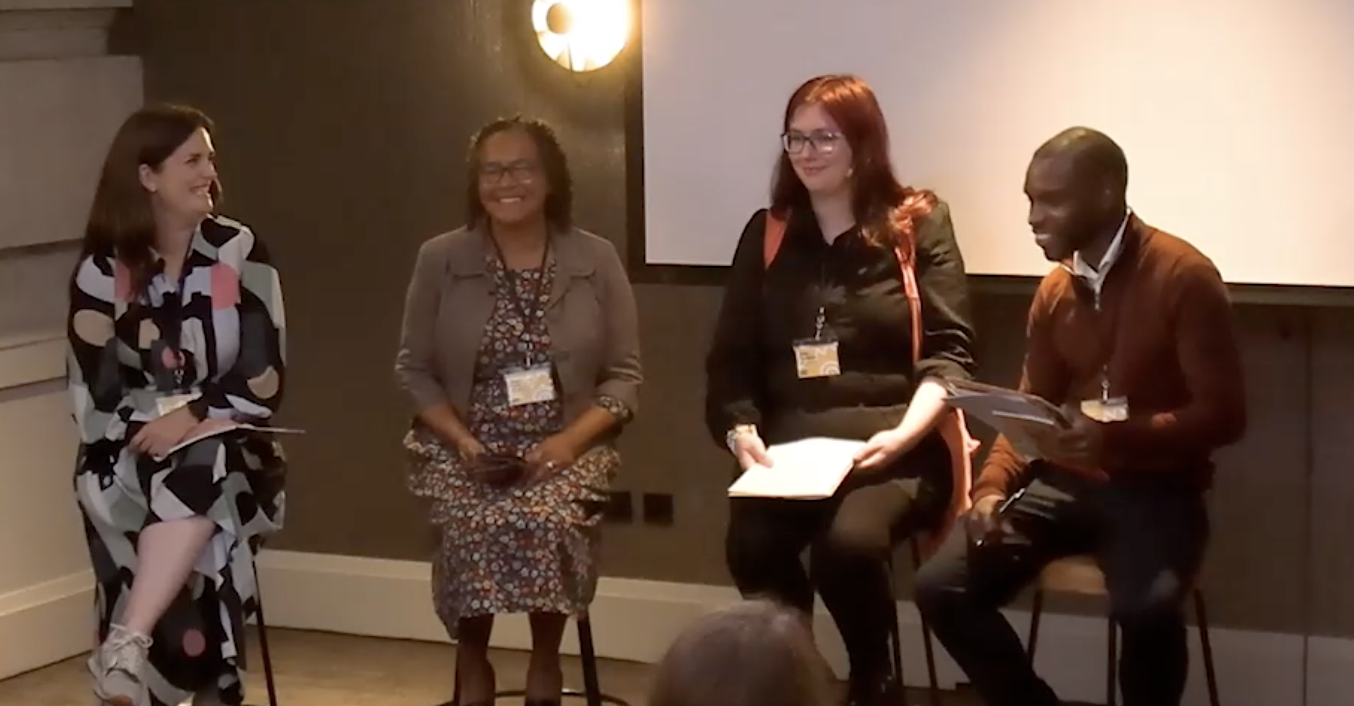
From the offset, the Bookseller Children’s Conference felt like an homage to libraries and the possibilities and inspirations they have to offer. But it was the Lending Lessons: What we can learn from (and about) libraries today discussion where we could hear from librarians themselves. When Emma Braithwaite, the Head of Skills and Engagement at The Reading Agency, took to the stage, she surmised what we all know to be true: that libraries are accessible, democratic spaces where children can go to access the choice they so often crave in their reading material.
Katy Vaughan, a Library Assistant from Bournemouth Library, went on to explain that libraries are more than just a place of reading. They can be an outlet of creativity in art and crafts, or understanding the world through science experiments, or even a forum to discuss Minecraft! Vaughan highlighted that not only do libraries offer something for everyone, but they’re free too, and can be the perfect place to go on a rainy day (especially during the cost of living crisis).
In July, the University of East Anglia reported that libraries in England generate at least £3.4bn in value a year through services supporting children’s literacy, digital inclusion and health, a statement that we would expect, ultimately, councils to listen to and invest in. Yet, spending on libraries in Britain has fallen by 17%, according to new statistics, despite in-person visits increasing by 68% since the pandemic. The government continues to tighten its purse strings despite an affordable need and want from the public. So, what is the solution?
Emma Braithwaite put it best: ‘book borrowers are book-buyers’. Our job as publishers is to stop thinking of libraries as any form of competition. Stella Hine, the Site Librarian for Brinsbury College, commented that ‘librarians and publishers may have been pitted against each other in the past, but I honestly believe that we have far more in common than we have that divides us’. Collaboration is the key, be it through marketing strategies, social media, roadshows or review panels. Putting books into the hands of children is the end goal regardless of how we get there, either via a Waterstones, an indie or a library. We must invest in the future of reading.
Today’s children are tomorrow’s readers, and we should be taking every step possible with them, preferably in the direction of a library.
Featured Image: Library of Mistakes
 MSc Publishing – Industry Accredited Postgraduate Degree