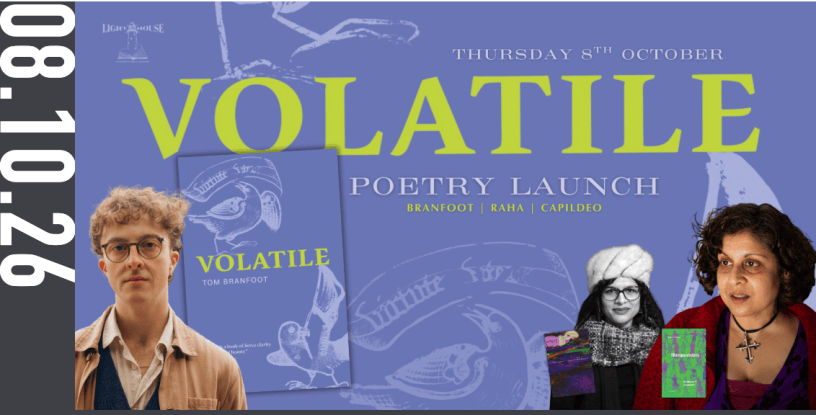
On a blustery, rainy October evening after classes had ended I made my way to Lighthouse. I attended the poetry event launch of Volatile by Tom Branfoot, featuring two quest speakers, Nat Raha and Anthony Vahni Capildeo, who both read poems about violence and the genocide in Gaza. There was a safety in listening to poetry surrounded by shelves of queer and political literature. Bookshops like lighthouse are so important as they stand out by positioning themselves as radical. In today’s climate this holds more weight as we see more and more people being silenced when speaking about political issues. They actively partake in ‘seeking out own-voice narratives and diverse writing, so that our shelves and our sales reflect our values. A strong commitment to independent presses nurturing such talent’ (Lighthouse Books). Having spaces that offer safety to marginalised communities is essential, and this event was extremely important in today’s political climate.
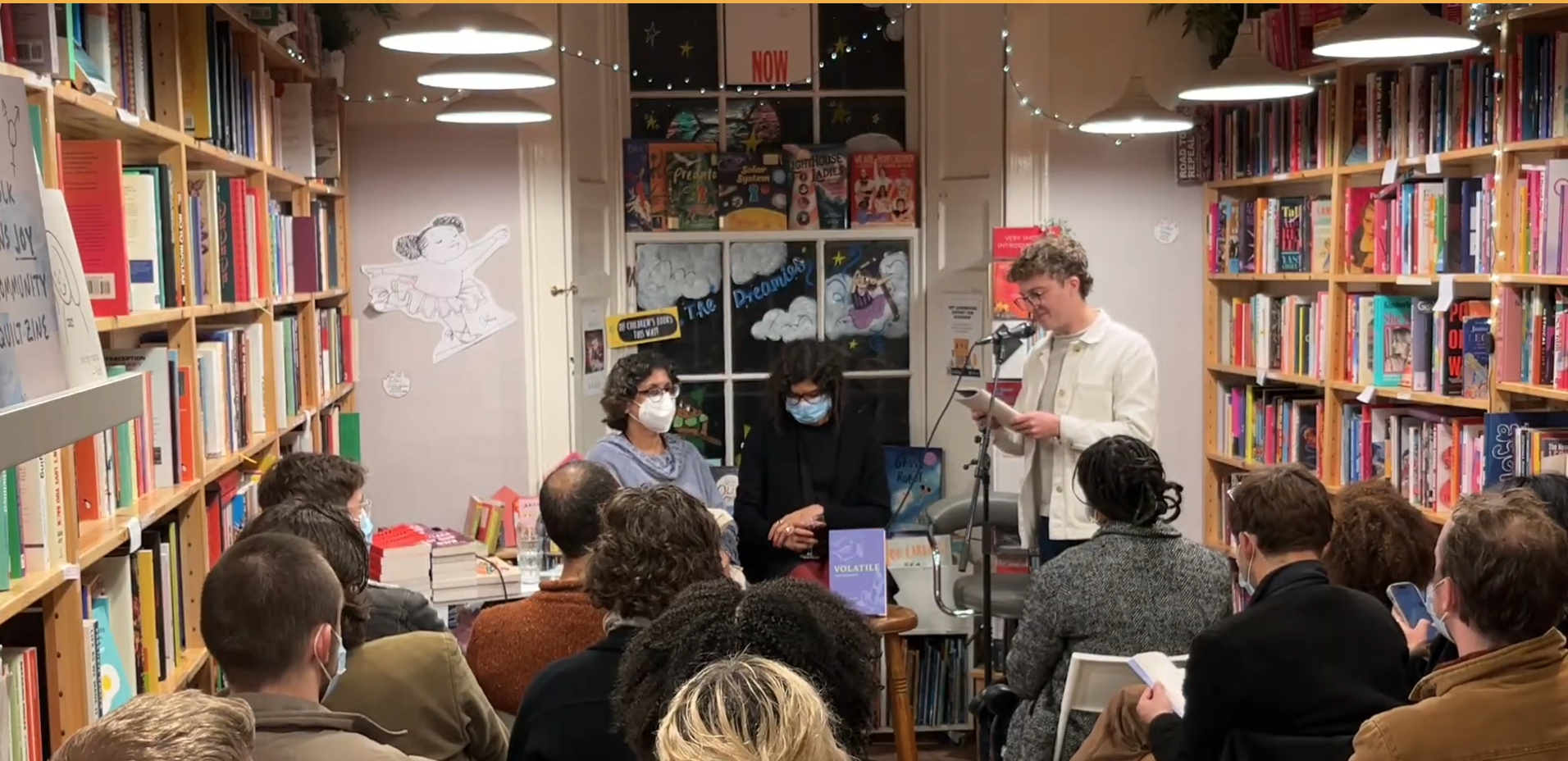
Poetry can become a form of activism; Faulkner echoes this when she states, ‘Poetry is political. Writing, performing, and publishing poetry is important political activity’ (Sandra L. Faulkner, 89). Faulkner later refers to Jay Parini, who says ‘Poets’ work is politically powerful because the language of poetry provides deep understanding in the ways that other writing does not’ (89). This is particularly poignant when it comes to Tom Branfoot, as his shortlisted poem A Parliament of Jets speaks about his experience of being in the idyllic countryside of the Lake District and seeing an F-15 eagle fighter jet, and this clash of scenery and machine made him think of Gaza.
When being interviewed by Forward Arts Foundations blog, Tom Branfoot spoke about this contrast of being in such a beautiful landscape and that being disrupted by the fighter jet. Tom said, ‘Although we were inside a quintessentially English landscape, the global imposed itself onto the pastoral through these symbols of war deployed by the Israeli Air Force’ (In Conversation with Tom Branfoot). This is a stark reminder of the lived experience of the Palestinian people. Poetry in this case becomes the connector, a place where words wield power by standing against complicity and giving voice to the silenced.
Poetry is political, and Tom gives space for this in Parliament of Jets, as he reached out to two Palestinian birdwatchers, Mohamad Shuaibi and Saed Shomaly, as the risks of birding in occupied territories increase. Tom included this contrast to highlight ‘birds’ borderless flight and their surveilled, restricted experience of land was stark.’ (In Conversation with Tom Branfoot) He notes that he wishes this poem didn’t have to exist, as he says ‘I wish nations like ours had intervened long ago to stop Israel’s barbaric military campaign, I wish the countless innocent Palestinian civilians did not have to endure this ongoing occupation, ethnic cleansing and genocide that our government is complicit in’ (In Conversation with Tom Branfoot)
After the event, I was left with a quiet hope, as the poets used their words to enact change. Speaking to Tom whilst getting my book signed, I told him how much his words had moved me. We need the bravery of poets like Tom Branfoot, Nat Raha and Anthony Vahni Capildeo and Bookshops like Lighthouse to facilitate these conversations in order to shed light on what’s being silenced.
word count: 546

