
The global political landscape no doubt infiltrates the everyday lives of people. But how does it affect the publishing industry? I looked at recent events in our industry to see how publishers, booksellers and authors are taking a stance against politicians, billionaires and political agendas, what this might indicate about freedom of expression, and how individuals can take a stand for change.
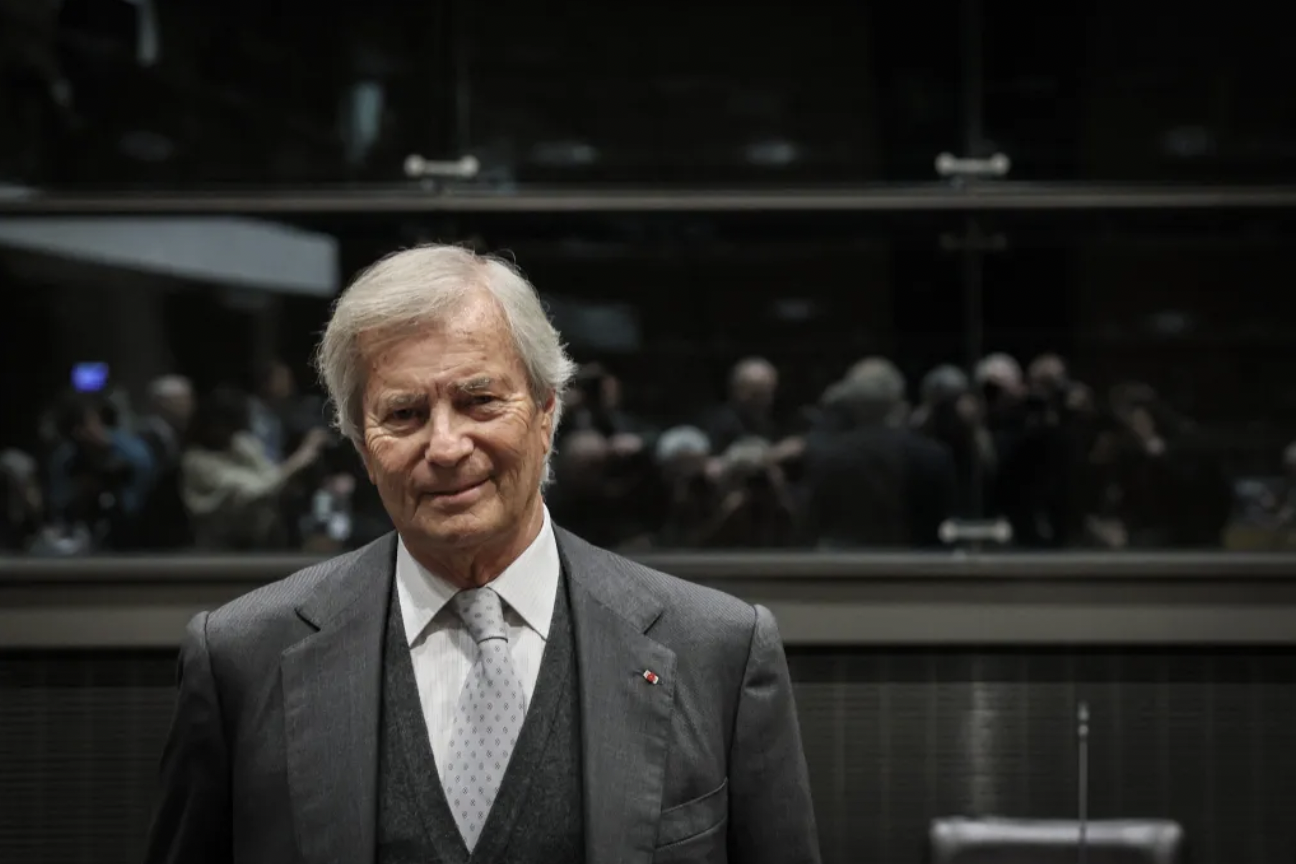
In April of 2026, news came of approximately 230 authors quitting French publishing company Grasset, a subsidiary of the Hachette Book Group (HBG), after the dismissal of CEO Olivier Nora, and in protest of the owner, French billionaire Vincent Bolloré (Cassasus, 2026). A class-action suit is now in the works to recover their copyright from Grasset (Cassasus, 2026). Bolloré’s media empire has ‘been accused of promoting reactionary and far-right ideas’ (Chrisafis, 2026), meeting pushback from authors claiming they ‘refuse to be hostages in an ideological war that seeks to impose authoritarianism’ (Chrisafis, 2026). Bolloré’s media empire includes not only the HBG, but also has arms in radio, television and the conservative newspaper Le Journal du Dimanche (JDD).
Meanwhile in Italy, on the same weekend, hundreds of booksellers gathered for the annual Resilience, Innovation and Sustainability for the Enhancement of Bookselling Conference (RISE), where the question of censorship and political control over freedom of expression was discussed extensively (Nawotka, 2026). It seems like everywhere we look, we see creatives challenged and impacted by politics. Several Canadian booksellers declared their presence at RISE instead of the American Booksellers Association’s Winter Institute as a direct result of ‘President Trump’s belligerence toward Canada’ (Nawotka, 2026). The conference ended with Georgian novelist Iva Pezuashvili ‘speaking about the rapid erosion of literary freedom under Georgia’s increasingly authoritarian government’ (Nawotka, 2026), urging authors not to ‘underestimate the speed of democratic collapse’ (Nawotka, 2026). Fabian Paagman, managing director of Dutch chain Paagman Boekhandels, asserted: ‘Booksellers, libraries, distribution houses—we are curators. We are curators of titles, we are curators of trust. We cannot lose that.’
Booksellers, libraries, distribution houses—we are curators. We are curators of titles, we are curators of trust. We cannot lose that
Fabian Paagman, Paagman Boekhandels
Just last year, Sally Rooney’s position in UK publishing industry became uncertain as she declared her support for Palestine Action, having ‘far reaching consequences for her as an author and her right to free expression’ (Casciani, 2025), as well as calling into question her eligibility to receive royalties from her publisher, Faber, or from the BBC for the adaptations of her novels Conversations with Friends and Normal People. Consequently, she did not attend the 2025 Sky Arts Award for Literature ceremony to receive her award, for risk of being arrested (Creamer, 2025).
To see authors such as Sally Rooney take such a firm political stance, at great personal and financial cost, asserts her position as a ‘curator of trust’ (Nawotka, 2026). When each consumer decision seems to have an ethical implication, it is promising to be able to support authors who stand for the same issues you do.

All this highlights the impact global politics has on the industry we as publishing students hope to work in. Can authors really write what they want? Can publishers publish what they want? An overarching connection between government interest and literary independence undermine our trade – it infiltrates book selling, book writing, and book publishing. To see resistance from Sally Rooney, or the 230 authors at Grasset, is reassuring. It’s difficult at times to see how individuals stand a chance against large media conglomerates, tech giants or politicians. But news like the upheaval at Grasset sparks hope. All this is to ask: can the many outweigh the few?
Bibliography
Casciani, D. (2025). Sally Rooney books may be withdrawn from UK sale over Palestine Action ban, court told. BBC News. [online] 27 Nov. Available at: https://www.bbc.co.uk/news/articles/cm20ldz0g9ro. [Accessed 2 May 2026].
Chrisafis, A. (2026). More than 100 writers quit French publisher in protest against rightwing owner Vincent Bolloré. [online] the Guardian. Available at: https://www.theguardian.com/world/2026/apr/16/writers-quit-french-publisher-protest-against-billionaire-owner-vincent-bollore [Accessed 2 May 2026].
Creamer, E. (2025). Sally Rooney unable to collect award over Palestine Action arrest threat. [online] the Guardian. Available at: https://www.theguardian.com/books/2025/sep/18/sally-rooney-unable-to-collect-award-over-palestine-action-arrest-threat. [accessed 9 May 2026].
Eustache, B. (2026). Grasset’s crisis could be a watershed. [online] The Bookseller. Available at: https://www.thebookseller.com/comment/grassets-crisis-could-be-a-watershed [Accessed 2 May 2026].
Nawotka, E. (2026). European Booksellers Face Decline in Reading, Rise of AI, and Authoritarianism. [online] PublishersWeekly.com. Available at: https://www.publishersweekly.com/pw/by-topic/international/trade-shows/article/100221-european-booksellers-face-decline-in-reading-rise-of-ai-and-authoritarianism.html [Accessed 2 May 2026].
Siddique, H. (2026). ‘Immensely heartened’: Sally Rooney hails Palestine Action high court ruling as victory for UK civil liberties. [online] the Guardian. Available at: https://www.theguardian.com/uk-news/2026/feb/21/sally-rooney-high-court-palestine-action-ruling. [Accessed 2 May 2026].
 MSc Publishing – Industry Accredited Postgraduate Degree