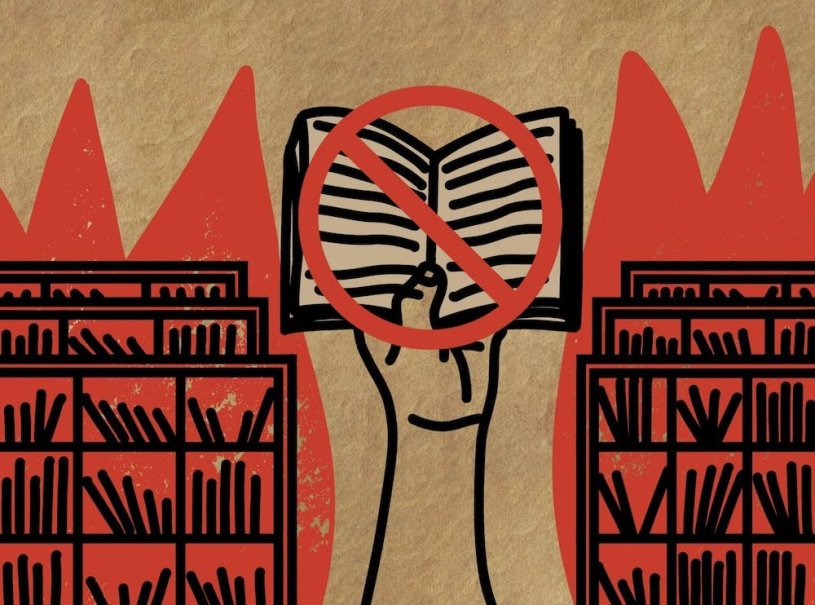
A chance meeting with a friend at London Book Fair led me to a talk entitled ‘Freedom to Read in the National Year of Reading: Facing Removal Requests and Supporting Targeted Communities’. With a panel including YA author Juno Dawson, CEO at Chartered Institute of Library and Information Professionals (CILIP) Louis Coiffait-Gunn, and Louisa Joyner from Faber, I knew it was going to be a fascinating discussion.
The main focus of the panel was the concerning trend of book banning. Often associated with more right-leaning areas of the US, book banning is a growing problem in the UK, with 50% of libraries being challenged for books in their collection (Dancey-Downs, 2024). While books on race are perennially controversial in the US, books with LGBTQ+ themes are being targeted in the UK (Hicks, cited in Creamer, 2025).
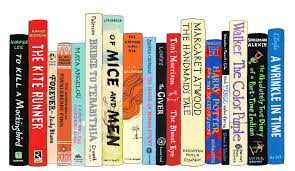
In 2014, Juno Dawson’s title This Book is Gay was published, described as a “funny and pertinent book about being lesbian, bisexual, gay, queer, transgender or just curious”, with a recommended age of 13 and above (Dubray Books, 2014). In 2023, the book faced serious protests claiming that it was ‘inappropriate’ for younger readers. The eye of this storm was in West Cork, Ireland, and as an Irish person sitting in the audience I couldn’t help but feel embarrassed by the outdated attitudes of our country – ironically known as the land of a hundred thousand welcomes.
This was a deeply troubling time for librarians and booksellers in Cork, as they were targeted by far-right protestors. Speaking to a former bookseller from the area, I was told that:
Working in a bookshop during the protests against queer literature was a really disconcerting time…there were videos circulating online of [protestors’] visits to other bookshops and libraries. We saw booksellers and librarians filmed without their permission; in some cases, they said horrible things to the staff and even got violent with some of the librarians. They interrupted a children’s reading in my local library, yelled really inappropriate things in front of the children, and got aggressive with the staff…the majority of our staff were members of the LGBTQ+ community, so we felt anybody was open to ridicule, and felt being filmed was really invasive.
Dawson was keen to highlight the detrimental impact book banning has on LGBTQ+ youths, for whom it’s not just about the book, but about what it represents; she described it as a ‘cultural banning’, and a censorship of who they are as people (2026). If they cannot see themselves represented on the page of the book without it being labelled as shameful or inappropriate, how are they supposed to live their lives as free and open individuals? Far from being harmful, these books are essential sources of knowledge; according to Dancey-Downs, “when young people want to understand their own identities or those of their peers, a book is a safe place for them to find that information. The next likely destination – the internet – is a very different situation” (2025).
Recently, Reform councillors have targeted local libraries in Kent, and a school in Greater Manchester removed almost 200 titles from its shelves after an AI-generated categorisation tool deemed them ‘inappropriate’. The problem is not going away; however, this talk taught me the importance of our role as publishers to constantly fight for diversity in our lists, and to advocate for and protect our authors as best as we can.
Word Count: 566 words
References:
Anonymous (2026). ‘Perspective of a former bookseller on Anti-LGBTQ+ literature protests in West Cork.’
Creamer, E. (2025) ‘Librarians in UK increasingly asked to remove books, as influence of US pressure groups spreads.’ The Guardian [online]. Available at: https://www.theguardian.com/books/2025/apr/14/librarians-in-uk-increasingly-asked-to-remove-books-as-influence-of-us-pressure-groups-spreads (Accessed on 31st March 2026).
Dancey-Downs, K. (2024) ‘Banned: school librarians shushed over LGBT+ books.’ Index on Censorship [online]. Available at: https://www.indexoncensorship.org/2024/08/banned-school-librarians-shushed-over-lgbt-books/ (Accessed on 27th March 2026).
Dancey-Downs, K. (2025) ‘Reform UK’s ‘Children’s Book Bans’ Could Open the Floodgates for Censorship.’ Byline Times [online]. Available at: https://bylinetimes.com/2025/07/08/reform-uks-childrens-book-bans-could-open-the-floodgates-for-censorship/ (Accessed on 1st April 2026).
Dawson, J. (2026) ‘Freedom to Read in the National Year of Reading: Facing Removal Requests and Supporting Targeted Communities.’ London Book Fair, London, 11th March 2026.
Spanoudi, M. (2026) ‘School’s ‘removal of more than 100 books’ reflects ‘pressure on librarians’ to censor stock.’ The Bookseller [online]. Available at: https://www.thebookseller.com/news/schools-removal-of-more-than-100-books-reflects-pressure-on-librarians-to-censor-stock (Accessed 31st March 2026).
Unknown. (2014) ‘This Book is Gay.’ Dubray Books [online]. Available at: https://www.dubraybooks.ie/product/this-book-is-gay-pb-9781471403958?srsltid=AfmBOoqIB5pzlZWranqOmf2umbnoHSFUyGbvqBJsYIrw_A3Lpe0jBdwT (Accessed on 1st April 2026).
Image Credits:
Cover image: Available at: https://literaryagentmarkgottlieb.com/blog/the-paradox-of-book-banning-how-it-only-serves-to-sell-more-banned-books (Accessed on 31st March 2026).
Books: Mount, J. (2017) Available at: https://www.pbs.org/wgbh/americanexperience/features/books-behind-bars/ (Accessed on 31st March 2026).
 MSc Publishing – Industry Accredited Postgraduate Degree