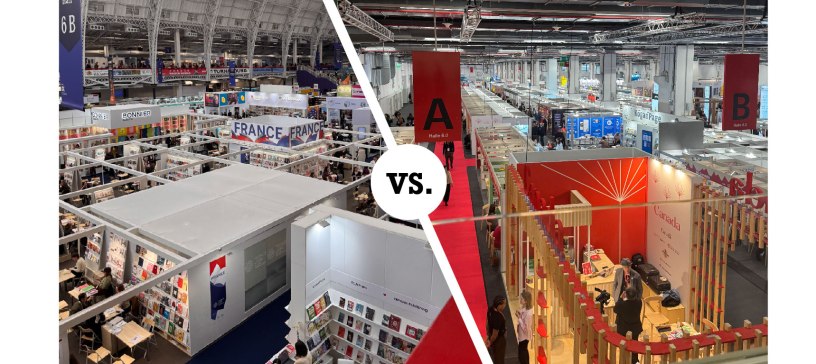
Book Fairs are a great place to get a glimpse into the publishing industry and make new connections. Still, they can also be quite overwhelming, most especially for disabled and neurodivergent people. After attending both major fairs, I could clearly make out a few differences in terms of accessibility. It is noted that the Frankfurt Book Fair (FBF) is the largest in the world, with a footfall of 118,000 professionals and 120,000 private visitors in 2025 (Frankfurter Buchmesse, 2025a), compared to the London Book Fair (LBF) with 32,000 professionals (The London Book Fair, n.d.). However, even a small change can have a huge impact.
1. Sensory Room
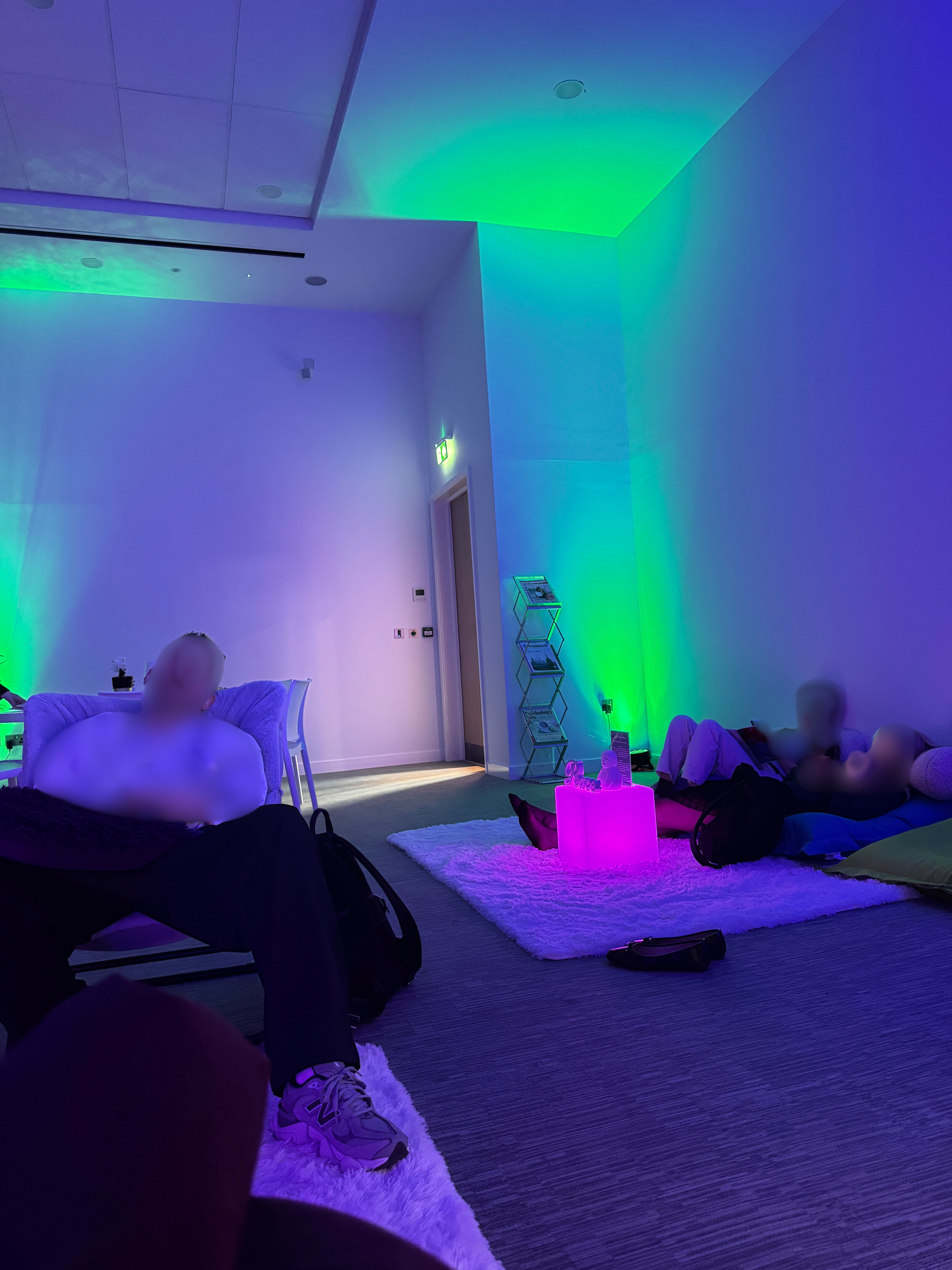
The LBF provided a sensory room, away from the crowds and noise. They collaborated with a company called Event Well, which specialises in creating safe and calm spaces at big events (EventWell, 2019). The room was clearly labelled from the outside and on maps. It was a small, carpeted space with soft, dimmed lighting to ease the sense of overwhelm. Next to reclined cushioned chairs, there was space to lie down and recharge before the next meeting or panel. They even provided weighted blankets, stim toys, and magazines for those who wanted them. A trained staff member was available in case extra assistance was needed. The room was in high demand each time I used it. LBF introduced this room in 2024 (Garanasvili, 2026), while FBF followed in 2025, offering two rooms in different areas (Frankfurter Buchmesse, 2026). However, during my visit to the FBF in 2025, I could not find either room. They were neither advertised nor marked on the overall map nor on their service map (Frankfurter Buchmesse, 2025b).
2. Inclusion and Accessibility Hub
This year, the LBF also launched the Inclusion and Accessibility Hub to create more awareness inside the industry, because every child, no matter their circumstances, should be provided with books they can read. Multiple organisations were present: Living Paintings, Inclusive Mind, ClearVision, My Kind of Books, to name a few (Reece, 2026). They provided professionals with information and resources on how they could make their books more accessible for a broader range of readers. This is exactly the right platform to raise these issues, and I would love to see more of that at the FBF as well.
3. Colour Coded Floor
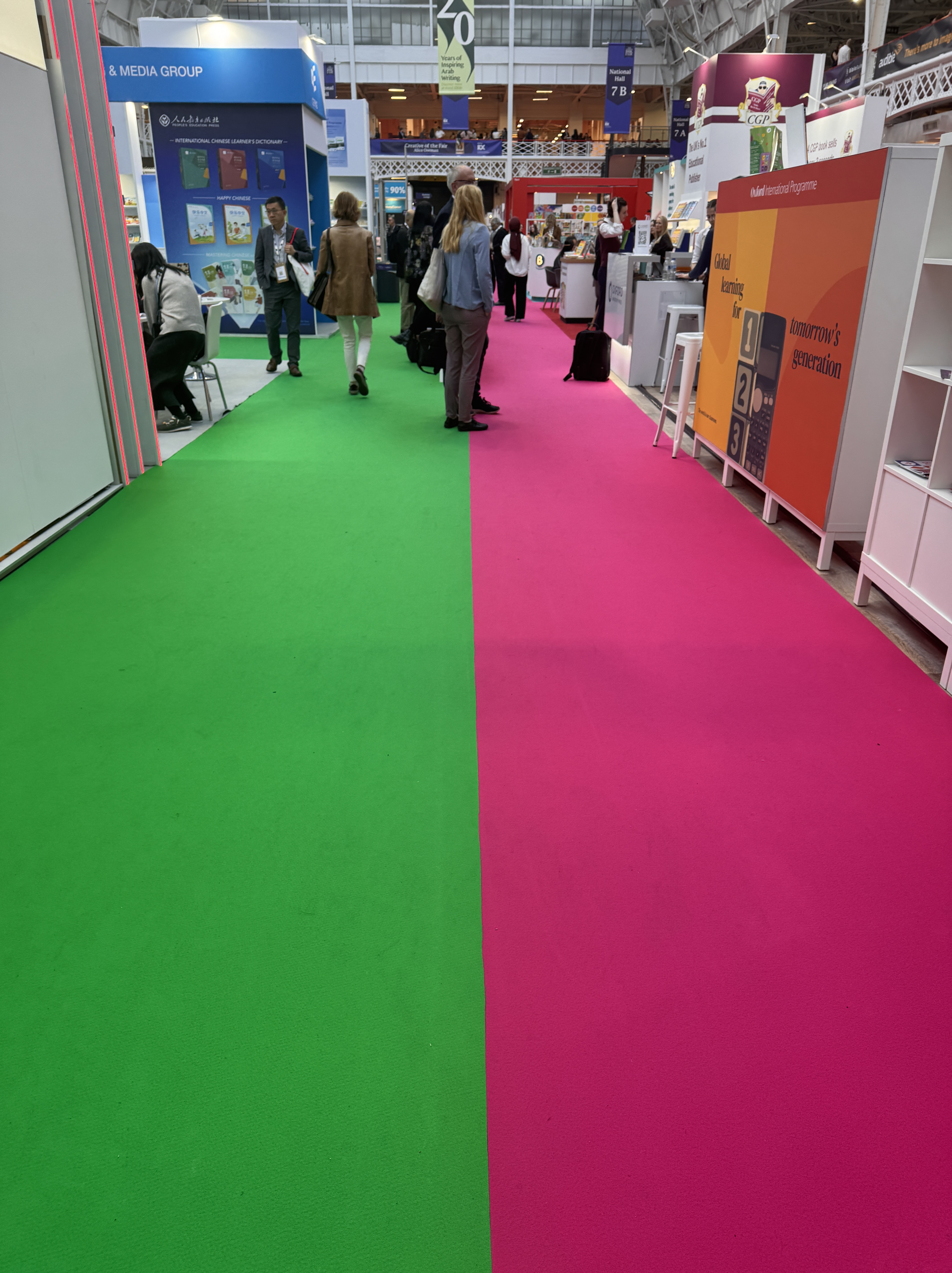
It was such a minor detail, but giving each area its own distinct colour made it much easier to navigate the fair, especially for a first timer. Some of the actual signs and direction indicators were overshadowed by huge stands or flashing lights, trying to catch my attention. To orient myself, I simply had to look down. From there, it became a matter of pattern recognition, knowing which colour corresponded to which area, rather than searching for the hall numbers hanging down from the ceiling.
This post is not intended to criticise but simply give feedback from a fellow neurodivergent who enjoys attending these events. Unfortunately, most of the time, I have to bow down to the overwhelming mental and physical stress they cause me. There is still a lot of room for improvement for both fairs, but at least I can say I would love to attend LBF again, whereas I had to cancel my second day at the FBF due to sheer overwhelm and inaccessibility.
Bibliography
EventWell (2019). EventWell. [online] EventWell. Available at: https://eventwell.org [Accessed 13 Mar. 2026].
Frankfurter Buchmesse (2025a). Frankfurter Buchmesse continues to grow – and connect the world of literature | Frankfurter Buchmesse. [online] Buchmesse.de. Available at: https://www.buchmesse.de/en/press/press-releases/2025-10-19-frankfurter-buchmesse-continues-grow-and-connect-world-literature [Accessed 13 Mar. 2026].
Frankfurter Buchmesse (2025b). Messe Frankfurt Service Map. Available at: https://www.messefrankfurt.com/content/dam/messefrankfurt-redaktion/corporate/documents/de/downloads/MF-Mobilitaet_Ebenen_06_15.pdf [Accessed 13 Mar. 2026].
Frankfurter Buchmesse (2026). Accessibility | Frankfurter Buchmesse. [online] Buchmesse.de. Available at: https://www.buchmesse.de/en/visit/accessibility [Accessed 13 Mar. 2026].
Garanasvili, K. (2026). London Book Fair: A Survival Guide. [online] National Centre for Writing | NCW. Available at: https://nationalcentreforwriting.org.uk/writing-hub/london-book-fair-a-survival-guide/ [Accessed 13 Mar. 2026].
Reece, A. (2026). The London Book Fair launches new Disability Inclusion and Accessibility hub – Books For Keeps. [online] Booksforkeeps.co.uk. Available at: https://booksforkeeps.co.uk/59124-2/ [Accessed 13 Mar. 2026].
The London Book Fair (n.d.). Who Will You Meet? Visit LBF | The London Book Fair. [online] http://www.londonbookfair.co.uk. Available at: https://www.londonbookfair.co.uk/en-gb/visit.html [Accessed 13 Mar. 2026].
 MSc Publishing – Industry Accredited Postgraduate Degree