‘Publishing is a very competitive industry’ is the echo that has been following not just myself, but every passionate peer who fell down the metaphorical rabbit hole of starting their career within this exciting industry. Unsurprisingly, this so-called echo was reiterated on the course’s induction day. Combined with the rush of studently relocation, the buzz of eager and anxious voices in the background, and my own fear of failure, an elevated level of jitters circled the room.
Before the spiralling started, an enthusiastic and passionate guest speaker arrived to talk to us about the magazine industry and her experience working within it. The incredible Nikki Simpson—founder and director of International Magazine Centre—has managed to inspire enthusiasm within the room in no time.
Undoubtedly, book publishing is different to magazine publishing, yet the core ideas, required skills and outcome goals are all the same: work hard within a team, know your editorial and design toolkit, and at the end enjoy the fruit of your hard work, aka the published text!
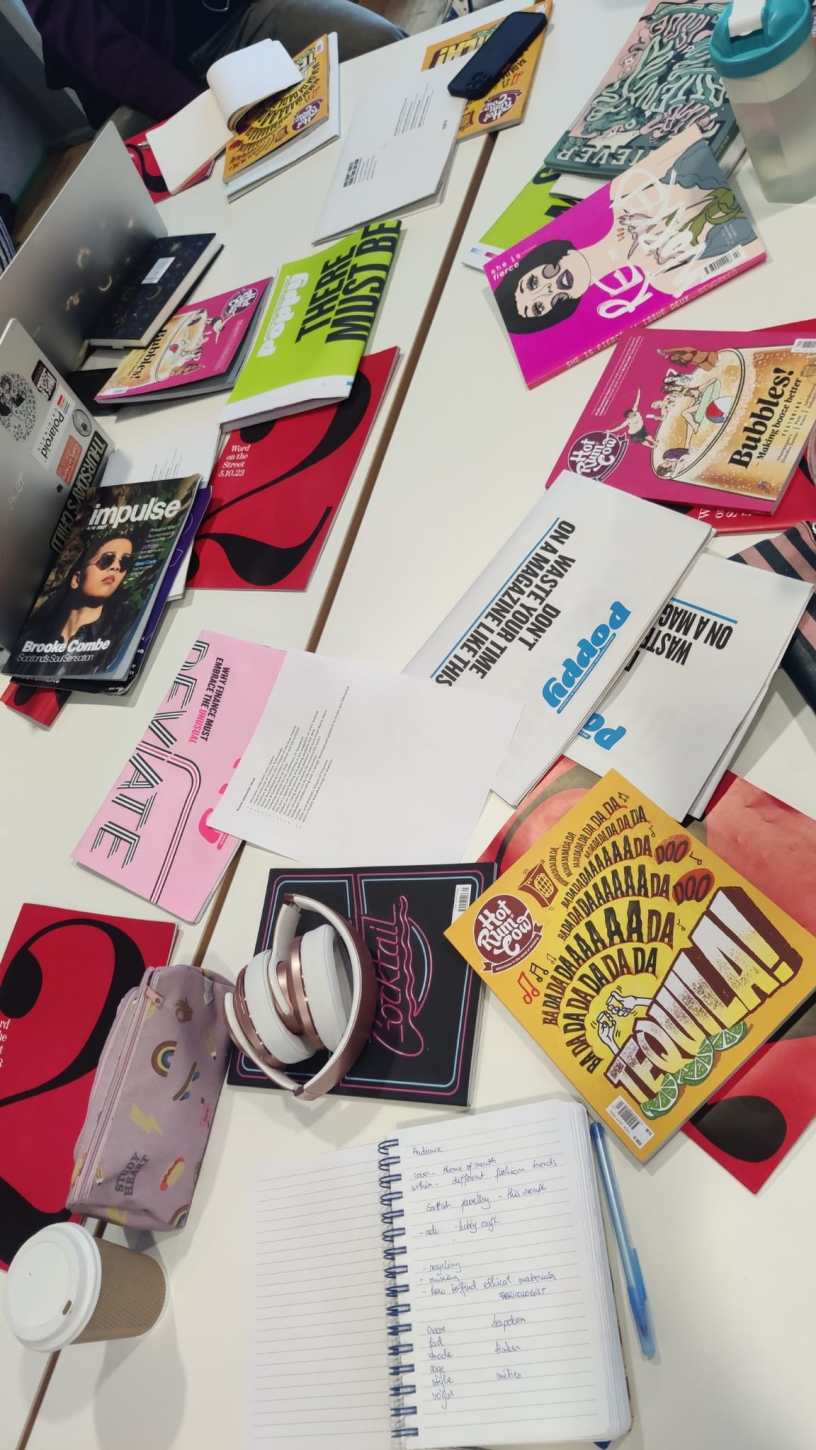
Fast forward to January this year, I had the opportunity to take part in the Magazine Challenge week, led by no other but Nikki herself.
The challenge
The challenge of the week was to design a magazine from scratch and have it print-ready in 5 days. Seems impossible at first, doesn’t it? Well, the fear and stress soon turned into excitement that drove the whole team across the finish line.
Everybody quickly got allocated into a group, each consisting of publishers, designers, journalists and photographers. The themes were next, and we got the lovely mix of a B2B craft and fashion magazine.
The process
Over the 5 days, the team got started on thinking about the title, the flat plan, article themes, ads, etc. Followed by role distribution, scheduling, and field work such as photography and interviews.
Retrospectively, the guidance we received, the clear communication, and the seamless collaboration was what made the team.
Kitty Finstad—editor, writer, and content marketing specialist—stated how, as publishers, we need to create pages that ‘excite, delight, and sell’, idea that heavily relies on the tone of voice used. Tone of voice establishes not only the brand’s identity, but it must go beyond the readers’ expectations. Which part within the magazine is best used to set up the tone of voice? The headlines. Therefore, creating headlines that are short, snappy, and emotive is the way to go. This task was beautifully achieved by the journalists and editors of the team, creating informative, accessible, yet fun words that grab the reader’s attention.
When it comes to a magazine, the front cover becomes the face of the brand, while the imagery and title on the cover is the character of its content. In short: the design is crucial. This is where Lucy Reid—a freelance designer based in Edinburgh—comes to the rescue. To establish a strong cover, designers need to create an impactful image. Does it work in print? How about the digital? All these requirements needed to be checked off, making sure to also stick to Diana Vreeland’s idea that ‘the eye has to travel’ on the page. The team had a talented illustrator who created the image of a face with features built with the use of various fashion and craft tools, such as needles, thread, scissors, earrings, and bracelets. Combined with the striking colours, the cover set up the style, tone and colour scheme of the magazine.
We had the articles, the photos, the cover. Our next question that needed attention was ‘how does one get the product into the hands of the consumer’, aka other craft and fashion businesses? Distribution. One aspect of publishing which I failed to realise sooner that is just as important as the production itself. George Sully—director at The Skinny—had the teams ask him questions about our ideas of distributing our magazines, getting us to consider ideas such as tiers of subscription for businesses with different needs, hand selling to businesses, and trial discounts which offer free digital with the first purchase of a print copy. This was the area entrusted to me, alongside the creation of a media pack. My first thought was one of fear of the idea to deal with the fiend known as math. Nonetheless, the printers were chosen, budget was established, tiers of subscription were planned, the particulars were handled, and voila, our magazine ‘The Art Of…’ was born! By the time our hypothetical 14th issue was distributed, our business was well and thriving.
The week concluded with each team presenting their very own 20-page magazine, rounds of applause all around, and a chance to network—yes, snacks and drinks provided. What a week!
Lessons learnt
Working within a team can be extremely rewarding, especially when every team member respects their peers, collaboration is at the heart of their work, and hyping each other contributes to the high quality of their work. However, teamwork comes with its challenges too, and what makes a great team is the ability to overcome these together. One of the biggest challenge our team had was sharing the workload when an internal deadline was missed due to factors out of our control. I’ve learnt that collaboration, respect, and passion are some of the key ingredients of a job well done. If you wish to peek at our magazine, come along to this years’ Degree Show, right here on Merchiston campus from 24-30 May!
International Magazine Centre. (2024). Magazine Challenge [In-person Project] Location: Edinburgh Napier University, Merchiston Campus
 MSc Publishing – Industry Accredited Postgraduate Degree