
Imagine it’s mid-January: new year’s resolutions have been made and are on the brink of being forgotten; winter is in full swing; and classes have yet to begin. In an effort to improve your increasingly busy CV, you sign up for the Magazine Challenge, a collaborative project, hosted by the International Magazine Centre (IMC) and Edinburgh Napier University, in which you have to create a twenty-page magazine in the space of five short days.
Though I was near giddy at being able to fully exercise my Type-A personality in being made my team’s project manager, I was nervous. What did it entail? What were my responsibilities? And what does it take to be successful?
According to the Association for Project Management (APM), as a project manager, you are to:
- Plan what needs to be done, when, and who by
- Consider and manage the risks involved
- Set the right standard
- Motivate the team
- Deal with unforeseen changes
- Deliver expected outcomes and benefits.
I tackled each one of these points, but I also found a few of my own…
Collaborate, don’t overcompensate
Having written in the past, I originally had said I would take on a third of the articles. However, once I understood the scope of the project, especially in the context of timeline that would mean we needed all articles written for the Wednesday at the latest, it would have been irresponsible to fulfil that initial goal. Each member of the team looked to me for the first and last word on writing, editing, marketing, and design. Now, I suffer from this hideous disease. It’s heartbreaking really. It’s called ‘I-think-that-I should-have-to-do-everything-myself’. There is no cure.
Or so I thought! It turns out that when you have a team you can trust, you can lean on them and let their talent flourish, so you end up with a product you’re all really proud of. It was uncomfortable at first, but once you start communicating transparently, you can only improve the experience for everyone. Equally, if you analyse descriptions of project manager roles, collaboration is absolutely key.
This example is from an advert for a Temporary Editorial Project Manager:
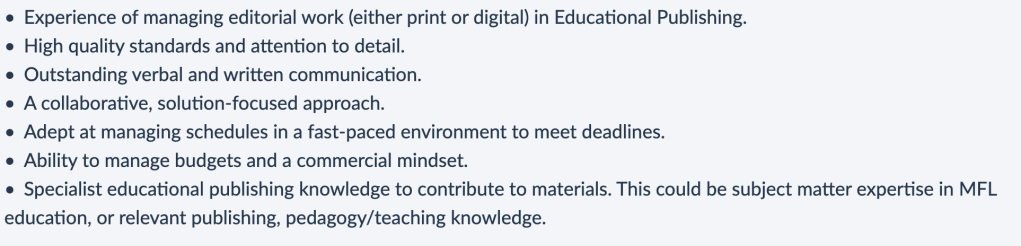
Isn’t it more impressive to tackle your next big project being able to say ‘I can collaborate with a plethora of creators and publishers to create a high quality finished product’ than ‘I did everything independently and I struggled exponentially’? However, it is important to remind yourself that…
Stress isn’t always a bad thing
A week after the challenge, Nikki Simpson, who runs the IMC, released her new edition of her company’s newsletter, titled ‘Are you being unprofessional?’ She wrote ‘one of the students got upset about halfway through the week… and apologised to me for “being unprofessional”’. You came here for the inside scoop: it was me! At the time, I was so ashamed of my outburst, of admitting weakness, of being overwhelmed, that I was worried I had acted unprofessionally and embarrassed myself in the process.
But I shouldn’t have felt that way because Nikki also wrote this: ‘I told them I’d far rather have someone work for me who cared enough to get upset, than someone who was indifferent’. This industry is about passion, creativity, and hard work, which means that we often take on more than we should. In 2022, The Bookseller reported that ‘89% of staffers who responded to their survey experienced stress during the course of their work over the last year, while 69% reported burnout’. Maybe we, as an industry, need to learn that, going into anything we truly care about, especially in a pressured environment, we might feel overwhelmed, stressed, and worn out, and we are absolutely allowed to feel that way.
It doesn’t end here
Call it the Baader-Meinhof phenomenon: I have seen adverts for project managers everywhere since January and, while I am still building my industry experience, seeing that companies are ‘looking for someone who can work with enthusiasm, initiative and flexibility’ proves that this was an invaluable opportunity, because I have had to manipulate myself to be those attributes. It’s a skill I will have to take with me no matter what I end up doing after graduation, and it’s why institutions like the Independent Publishers Guild, the Chartered Institute of Proofreading and Editing, and the Publishing Training Centre and have developed courses for both freelance and contracted editors/publishers. There will always be another project to be managed and, after this experience, I am excited to see what comes next.
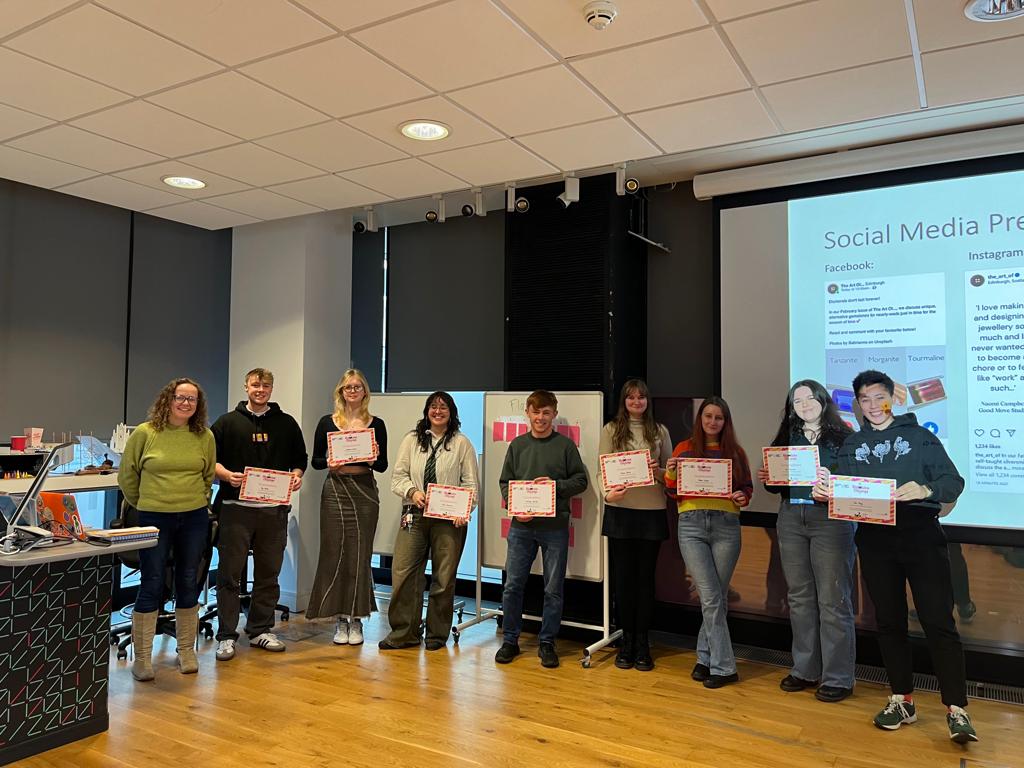
Thank you again to the International Magazine Centre, Edinburgh Napier University, and, of course, my lovely team. I am thrilled to say that The Art Of…, a craft/fashion magazine will be available to see at our Degree Show in May, and at Magazine Street later this year.
Follow me on LinkedIn for more about my projects, publishing, and all things editorial.
Featured image: IMC
 MSc Publishing – Industry Accredited Postgraduate Degree