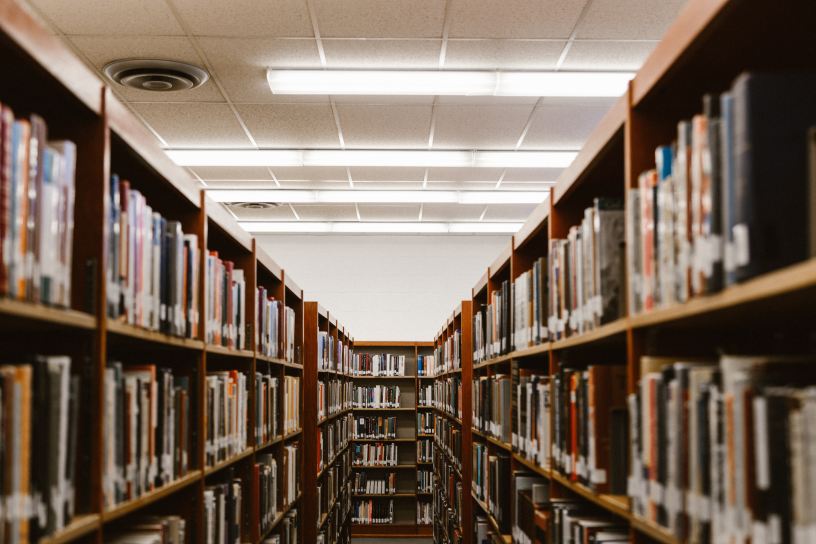
Libraries were a reoccurring topic at the 2023 Bookseller Children’s Conference, but amidst exciting discussions about fandoms, customizable book subscription boxes, and — bizarrely — the connection between E.L. James’s Fifty Shades series and the children’s book market, it’s easy to forget why we need to be talking about libraries. In 2019, the Guardian reported that over 800 libraries have closed in Britain since 2010, and it’s safe to assume that this worrying number only rose during the pandemic. Working conditions at libraries that still exist aren’t much better; in the ten years between 2009 and 2019, the 24,000 salaried employees working at libraries dropped to 15,300. Over 51,000 people working at libraries are unpaid volunteers.
Due to a lack of government funding, libraries are closing across the nation. Staff aren’t being compensated. A third of UK librarians are being met with demands to censor or remove books from their shelves — books that focus on themes of race, sexual or gender identity, and criticisms of imperialism.
So, where does that leave us? If the library is dying, are we expected to watch?
For centuries, libraries have been tenets of community, serving as gathering places, nurseries, and refuges all in one. The Stockbridge Library alone — one of the 28 libraries in Edinburgh — offers regular reading and crafts sessions for young children, leads mindful walks and hosts knitting groups for adults, and provides free period products. More than anything, a library is a place where people can simply be.
Sofia Akel, the founder of the Free Books Campaign, stressed the importance of these “third spaces” during her presentation at the Children’s Conference. She relayed a story about sitting in a major bookshop and witnessing a young girl kicked out for picking up a book and reading it without paying. “There were no libraries within walking distance in that area,” Akel said, underlining the reason she founded her campaign: everyone should be afforded equal access to books. Considering that one in every 15 children aged 8 – 18 in the UK do not have a book of their own at home, Akel’s determination to disseminate literature for free (specifically literature by authors of color) is invaluable. But what about the safe space to read these books?
There have been recent efforts made to support libraries, and yet the unique relationship between the publishing industry and libraries is nowhere near strong enough. We often think about libraries and publishing as existing in two separate spaces (old versus new, perhaps), but the two spheres overlap much more than we might assume. When a new release comes out, libraries receive distributed copies but are practically excluded from promoting the title — and thus, from attracting patrons. “Other than Joseph Coehlo coming recently on his tour, we don’t have [author visits],” said Katy Vaughan, a library assistant at Bournemouth Library.
“Book borrowers are also book buyers,” Emma Braithwaite, the head of skills and engagement at the Reading Agency, pointed out, making an argument for collaboration between publishers and libraries. Establishing that symbiotic relationship will not guarantee the salvation of libraries, but why not bring these pillars of community into the publishing loop?
As Stella Hine, a site librarian at Brinsbury College, aptly put it, “I think libraries are the key to the universe, really.”
Let’s not leave them behind.
References List
Akel, S. 2023. The Bookseller Children’s Conference. Case Study: Free Books Campaign and Festival. Guest speaker presentation. 2 October 2023. Location: County Hall, London.
Braithwaite, E., Hine, S., & Vaughan, K. 2023. The Bookseller Children’s Conference. Lending Lessons: What we can learn from (and about) libraries today. Panel discussion. 2 October 2023. Location: County Hall, London.
Photo by Priscilla Du Preez 🇨🇦 on Unsplash
 MSc Publishing – Industry Accredited Postgraduate Degree