The Bookseller’s Children’s Conference 2022 covered a wide range of topics in the world of children’s publishing. With this breadth of diverse presentations and information, it may have been easy to miss some major points.
One particular segment of the conference that caused a lot of discussions was Cassie Chadderton’s interview with Philip Jones of The Bookseller on ‘World Book Day and Beyond.’ In their interview, Chadderton explains some of the main goals behind World Book Day: to increase access to books for children, to encourage reading for pleasure among children, and to especially encourage reluctant readers to see themselves as readers. Part of the reason for wanting to foster these behaviours is due to the pandemic, Chadderton points out, which is still causing a disparity in reading for children in schools to the present day.
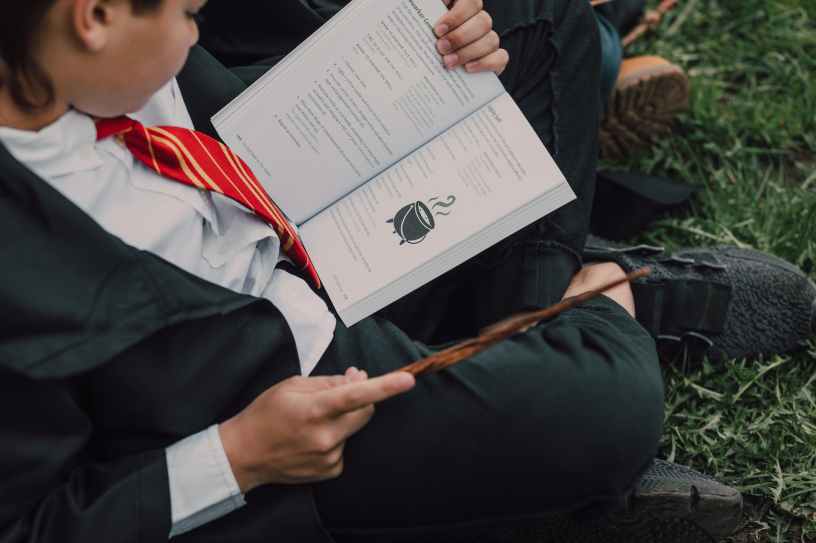
A rather divisive issue between the children and the teachers on World Book Day is centred around the aspect of dressing up. While it may seem innocent enough, the dress-up aspect of World Book Day is the number one feature teachers and parents wish to remove from World Book Day. Chadderton herself understands this stress, as a mother, but when met with these critiques and suggestions, Chadderton asks what makes the biggest difference in terms of getting children, namely reluctant readers, engaged and excited about reading books. Unanimously the response is: ‘dress-up’. While this may never be a win-win situation for teachers and students, the overarching goal of World Book Day is getting children excited about reading – even the ones who don’t see themselves as readers.
So if dressing up as one’s favourite book character for school gets a reluctant reader genuinely excited to pick up a book and begin conversations around these books, maybe some reluctant teachers can begin to appreciate Chadderton’s point.
When asked by a member of the audience about alternative platforms for books for children (i.e. ebooks and audiobooks) and whether or not this would cause the death of physical books, Chadderton explains that not only are children’s publishers and World Book Day in favour of alternative reading options, but they have data to suggest that children who prefer ebooks have an easier time blending into a multimedia style of teaching which still includes physical copies of books. The issue is ultimately not about how to get a child to pick up a book, but about how to make all children, especially those who do not yet enjoy reading for pleasure, see reading as a genuinely fun and engaging activity. World Book Day, as Chadderton eloquently explains, is truly about the children and meeting them where they are at in order to positively reinforce their reading choices.
Instead of asking ‘Should kids be dressing-up for World Book Day?’ we should be asking ourselves, ‘How can we best inspire children to enjoy reading?’ and ‘How can we make reading enjoyable and accessible to all children, including reluctant readers?’ When we begin asking these questions, we begin to see how fundamental it is to encourage reading-for-pleasure habits in children at a young age.
 MSc Publishing – Industry Accredited Postgraduate Degree