
‘Up the close and down the stair, In the house with Burke and Hare, Burke’s the butcher, Hare’s the thief, Knox, the boy who buys the beef.’– 19th Century children’s rhyme
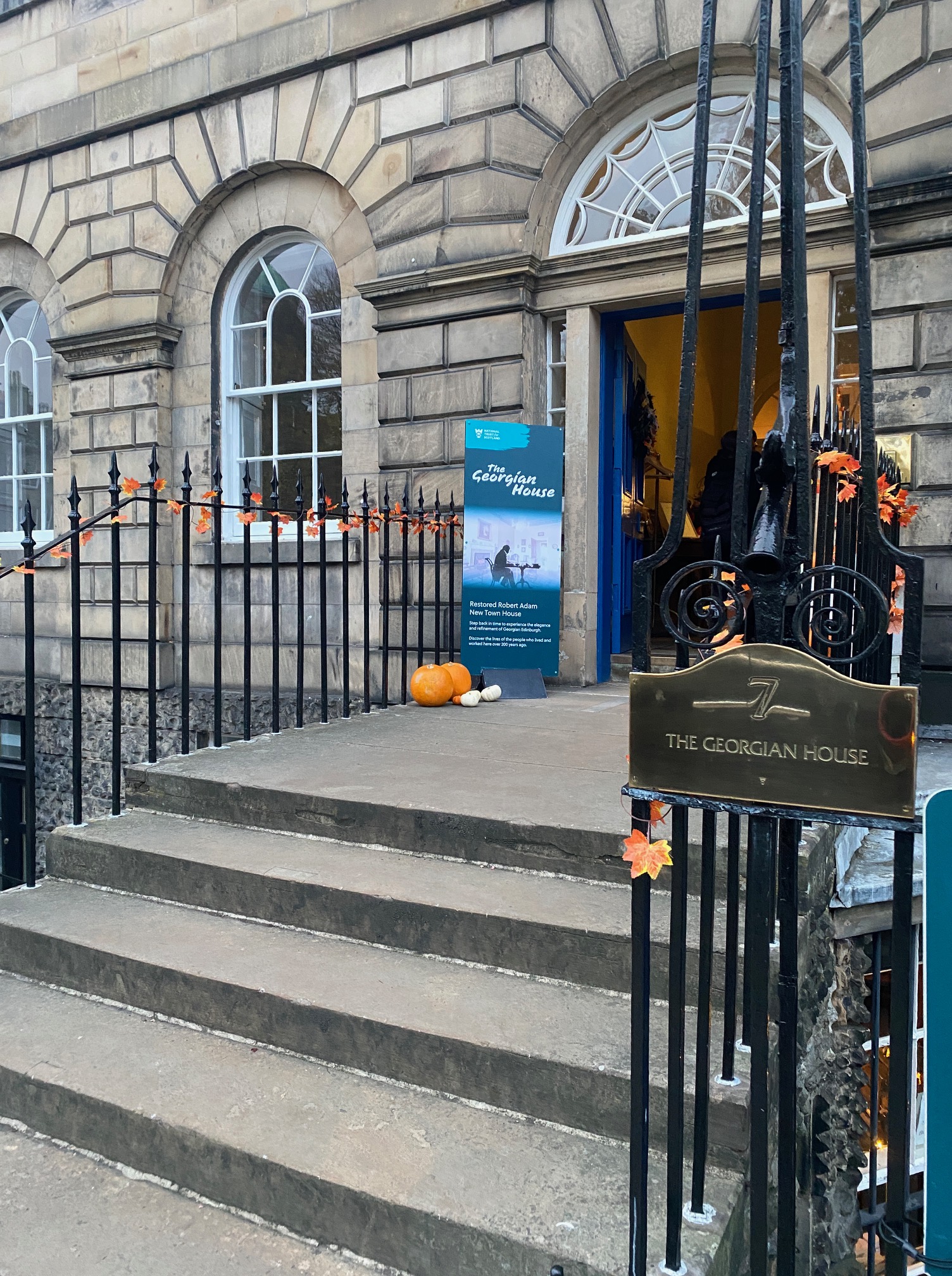
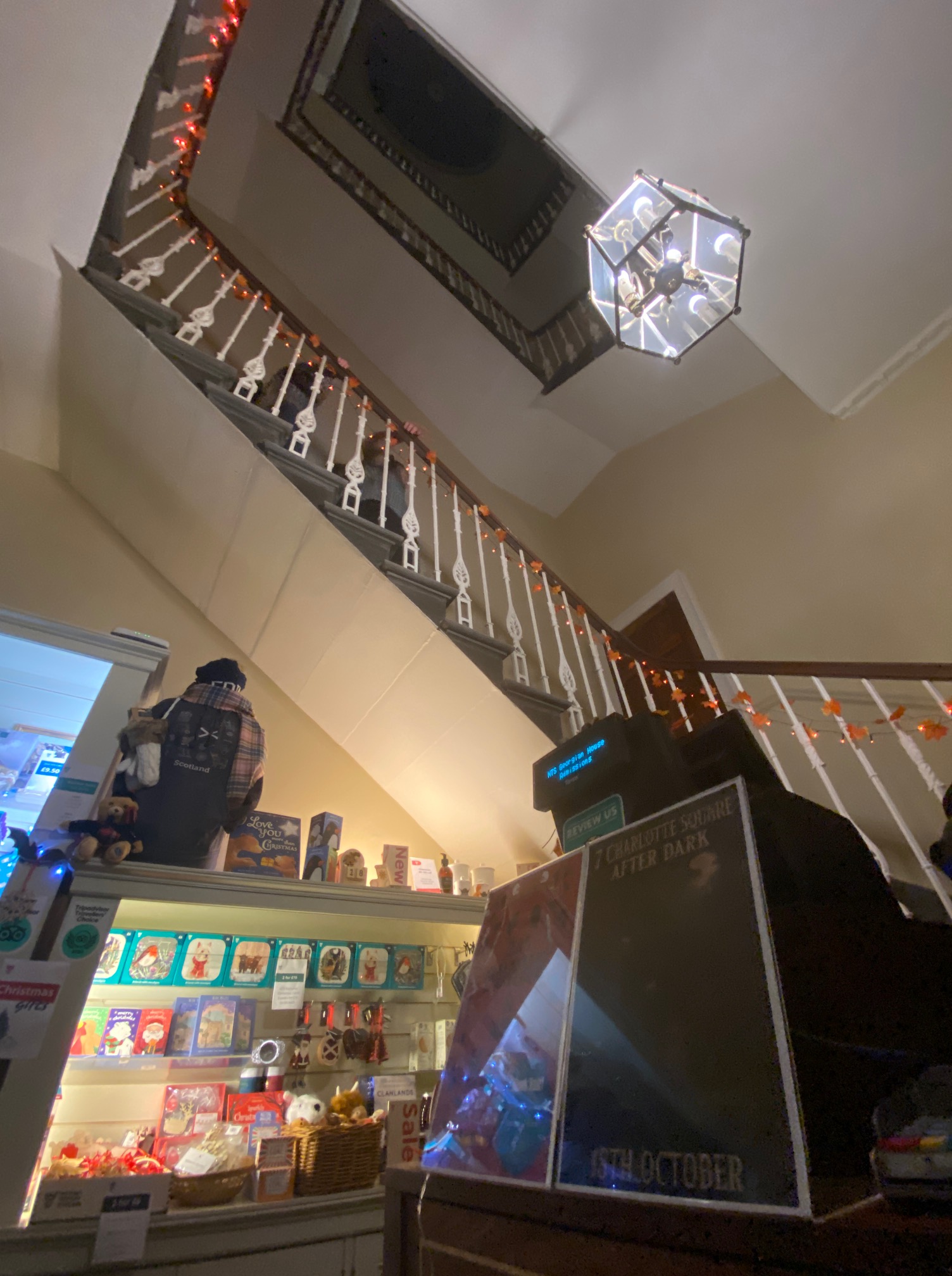
Leading up to All Hallows Eve, I attended a Halloween inspired book fair at the Georgian House in Charlotte Square. The 18th century building acted as the perfect backdrop for a reading of ‘Mrs Burke & Mrs Hare’ by Michelle Sloan. The novel sheds light on the roles that Helen Burke and Margaret Hare played in one of Edinburgh’s most notorious murder sprees. The historical significance of the venue rendered more chilling by the knowledge Lord Cockburn, a lawyer who defended Helen, resided in a property across Charlotte Square. The novel is written in two parts, from the POV of Helen and Margaret ‘Lucky’, then as a speculative imagining of their lives after William Burke’s execution. The monstrous and imposing figures of Burke and Hare cast long shadows, somewhat erasing their wives’ involvement, culpability and essential roles from history. As Sloan explains; ‘I know that Lucky definitely used a predatory side to her nature to entice some of the victims into their scheme.’ (Sloan, 2025) Feminist retellings, often pertaining to Greek mythology, are bringing to light the downtrodden and misunderstood female characters. Taking previously negative representations and rendering them more sympathetically, take Circe by Madeline Miller or Medusa by Rosie Hewlett. However, Sloan does not seek to exonerate the women but emphasise their complicity, attributing the notoriety fairly; ‘We’re revisiting and learning about them now. We can’t pick and choose, we have to know about the bad ones as well.’ (Sloan, 2025) Going some ways to recover women’s stories hidden in history.
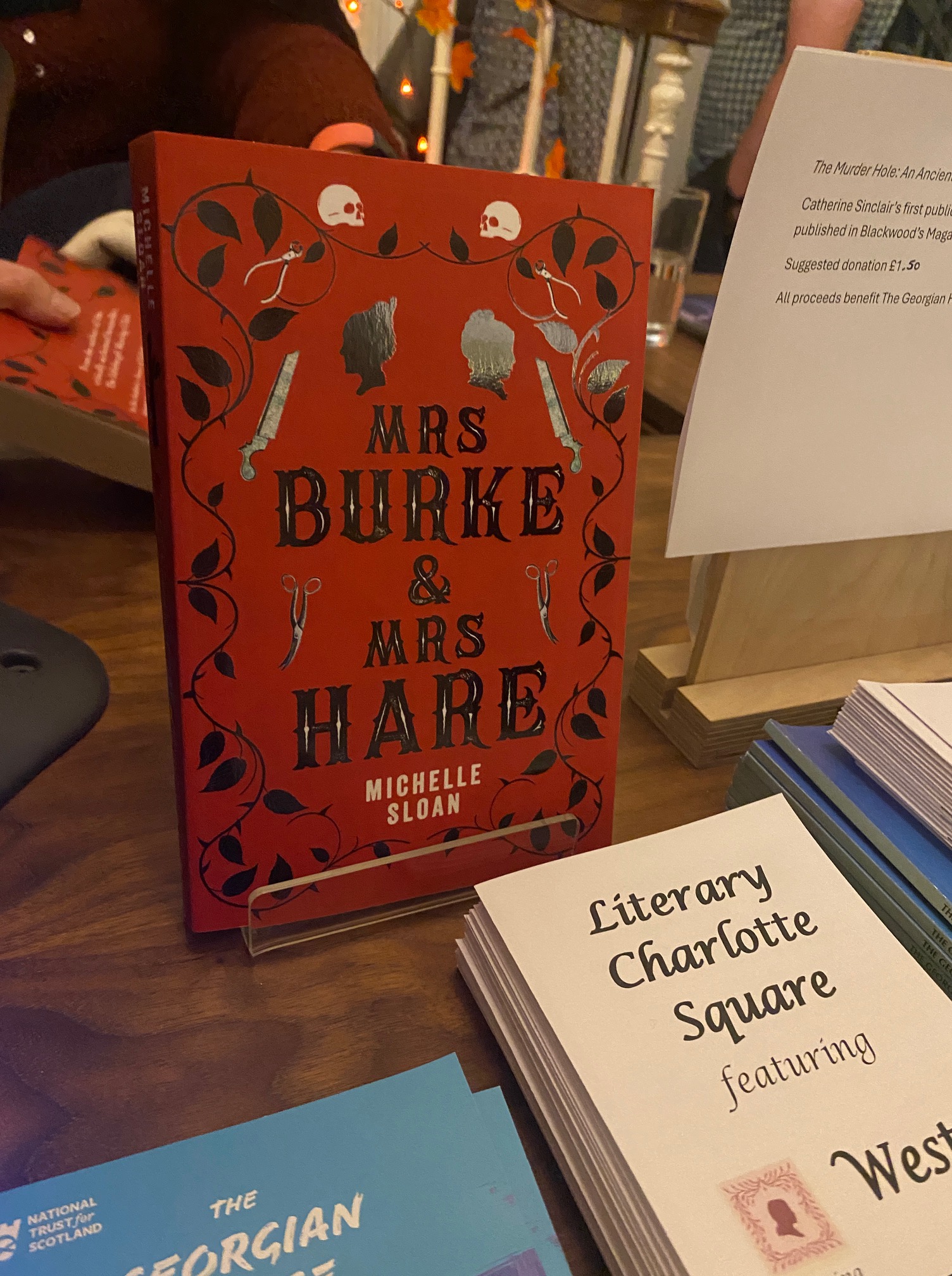
I wondered if Helen and Margaret were acquitted of their crimes so easily based on them being female, that they could not be perceived as individual agents capable of the carrying out the same callous calculated murders as their husbands? They were instrumental in the murders, using their femininity and innocuousness to lure isolated and vulnerable victims. Fazli credits Sloan for bringing depth to two cunning and monstrous women without reducing them to the conventional overly sexualised femme-fatale; ‘Sloan creates space for versatility in the form (…) both characters are violent and dangerous in their own ways, neither is sexualised overtly’ (Fazli, 2025). Incentivised by the monetary gain of selling fresh cadavers for medical study, the four killed at least 16 people, only Burke was executed, and Sloan imagines the fate of the rest. Upon investigation, I found little to no account of Helen and Lucky online, they were merely referenced as the spouses of Burke and Hare. Sloan reclaims some of the wives’ capability in chapter 10, in which the four take the life of their first victim. Lucky actively plays a role in Burking, the method of murder named after the notorious Burke- as it left no marks on the body; ‘Burking, where the victim is smothered, a hand covering their nose and mouth, while weight is put on the chest’. In this simple detail, Sloan elevates Lucky and Helen from accessories to murder (and their husbands) to full blown murderesses.
Sources
Michelle Sloan- Halloween Book Fair, The Georgian House, Thursday 16th October 2025 <https://www.whatsoninedinburgh.co.uk/event/162069-the-strange-case-of-7-charlotte-square:-halloween-book-fair/>
Mackie, R., (2022), ‘Burke and Hare: Here is the story behind Edinburgh’s most horrific and prolific serial killers’, Edinburgh News, <https://www.edinburghnews.scotsman.com/news/crime/burke-and-hare-here-is-the-story-behind-edinburghs-most-horrific-and-prolific-serial-killers-3679859> [accessed on 17/10/25]
Fazli, J., (2025), ‘Mrs Burke and Mrs Hare Michelle Sloan Book of the Month: July 2025’, Gutter <https://www.guttermag.co.uk/reviews/mrs-burke-and-mrs-hare> [Accessed 17/10/25]
Images
1,2,3- Taken and owned by Katrina Radin
Bibliography
<https://www.historic-uk.com/HistoryUK/HistoryofScotland/Burke-Hare-infamous-murderers-graverobbers/>
 MSc Publishing – Industry Accredited Postgraduate Degree