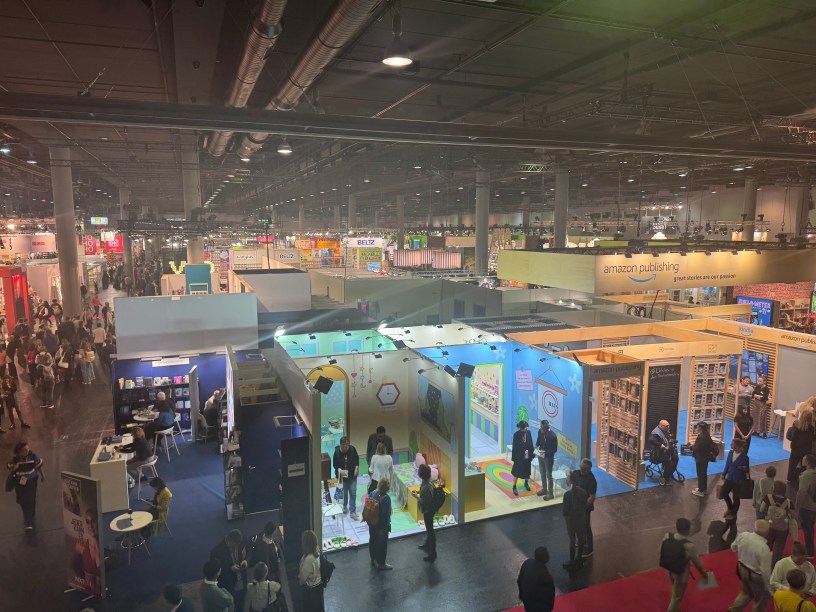
I had the opportunity to visit the Frankfurt Book Fair, the world’s biggest literary event, with 4,000 Publishers and over 200,000 guests. Since I have been once before, I knew what I was getting myself into and braved the sea of people to find out how industry professionals look to the future of publishing.
It goes without saying that I wish I could have split myself in half and attended every discussion, talk, or presentation, but the main focus of the fair was clear at first glance: AI.
Ai and copyright were the topics on everybody’s lips, whether people were against it or not, but one thing became clear – AI is here to stay.
Do we as humans even stand a chance against a robot?
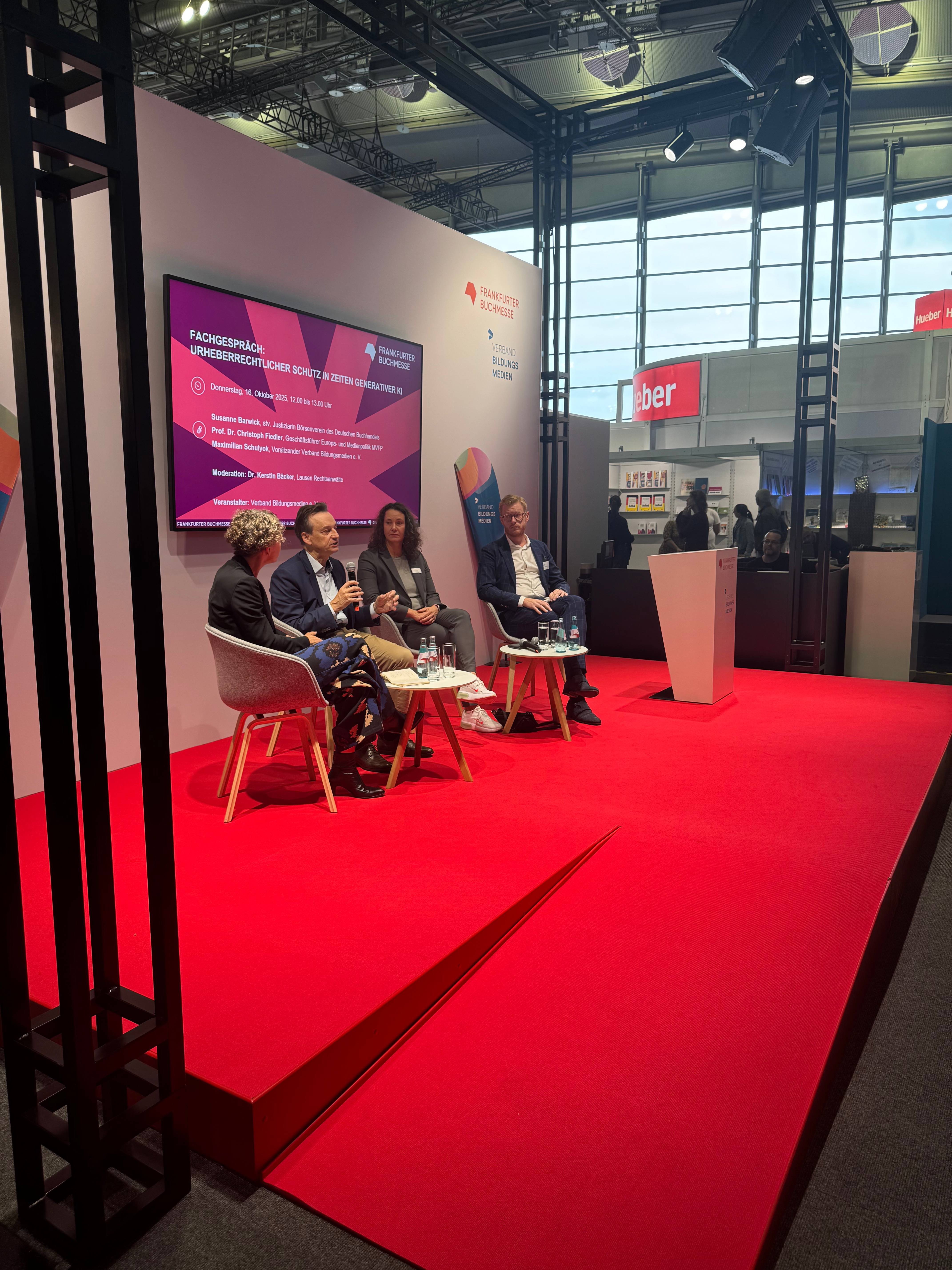
That was a question asked by Prof. Dr Christoph Fiedler, CEO of Europe and Mediapolitics MVFP, who talked about the importance of copyright regarding generative Ai. Currently, there are no clear guidelines on where the data comes from and who it was scraped from. The words that were used most often in all the talks I attended were ‘transparency’ and ‘right of disposal’. The knowledge to review where the data was sourced from or knowing for what the data could be used (Fiedler, 2025). It became apparent that nowadays publishers are not competing against each other, they are competing with the rapidly evolving tech industry and the giant brands behind it.
AI in marketing – hit or miss?
One talk in particular focused on the usage of AI in marketing. To showcase this, the presenter asked ChatGPT to stand in as another expert and give their thoughts on marketing. The (human) expert answered the question first, then ChatGPT got asked a similar question. The result was just as expected, it was a recycled answer of the expert’s previous answer. AI is very much confirmation biased (Biesemeier, 2025).
Although it ended on a funny note, because after three answered questions, ChatGPT announced that we had run out of free prompts and had to wait until the next day to continue. This gave us more time to hear from the actual expert. His key takeaway was: Don’t be afraid. AI is not perfect; it creates the illusion of perfection. It’s experience over perfection (Biesemeier, 2025).

The potential of AI.
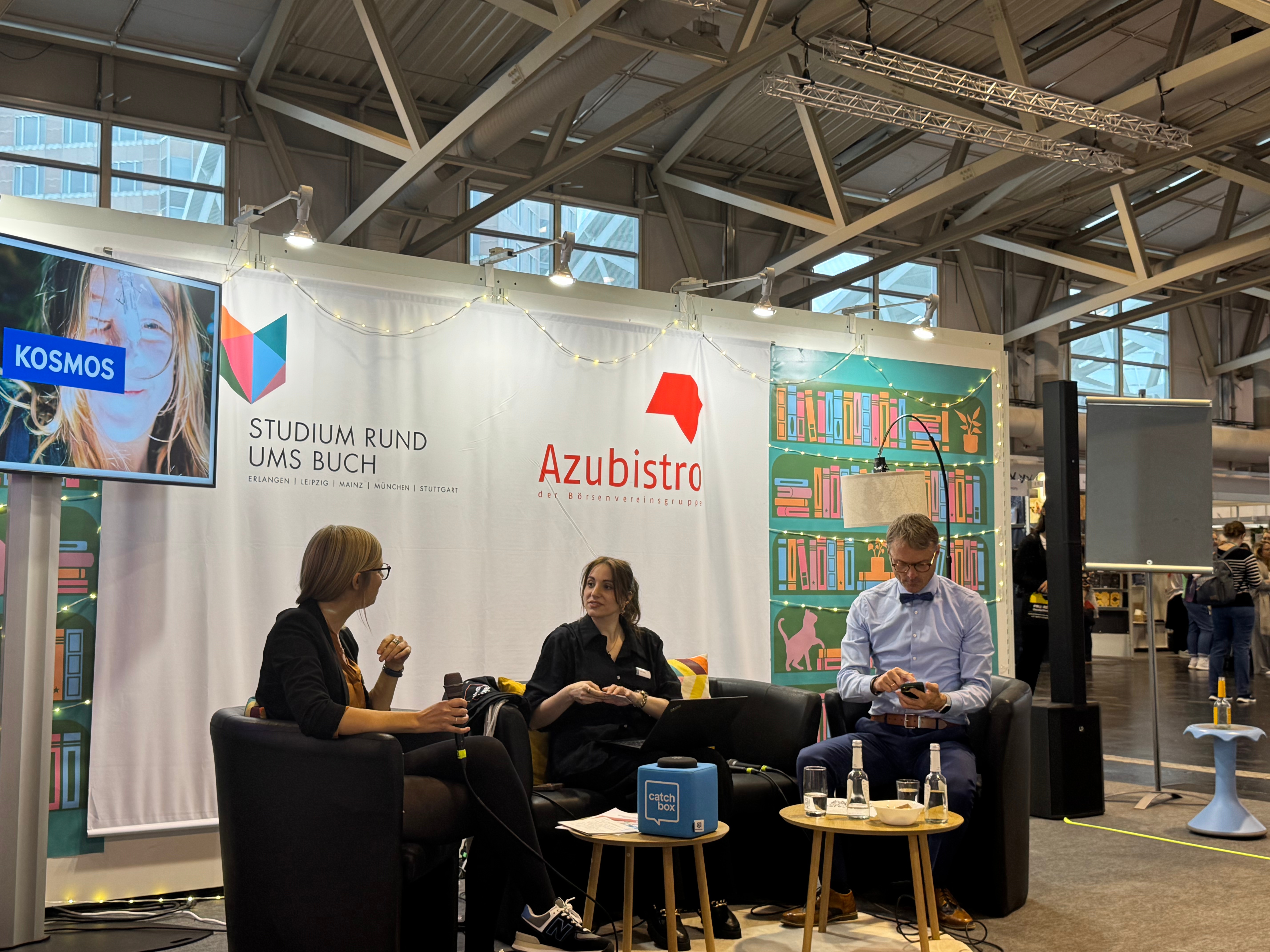
KOSMOS Publisher talked about how they have already implemented the use of AI in multiple departments. They have set up their own closed AI, so they can be conscious of the sensitive data they feed into it. It has improved their workflow and reduced their correction loops (Prota, 2025).
Overall, it was a great opportunity to learn from so many different people around the globe and see their perspectives on the future of the industry. Although the one thing I have to admit is that this was a trade fair first and foremost and not very welcoming to students asking questions. But luckily there were so many great panels and booths, which will keep one engaged the entire day.
Bibliography
Fiedler, Prof. Dr C., Barwick, S., Schulyok, M., Bäcker, Dr K. (2025). Copyright Protection in the Times of AI (Conversation). Frankfurt Book Fair, Frankfurt. 16 October.
Prota, L., Herr, Dr S., Schlütter, Prof. Dr O. (2025). Let’s get down to business: Successful implementation of AI-tools in Publishing (Conversation). Frankfurt Book Fair, Frankfurt. 16 October.
Cox, E., Biesemeier, R., Collins, A. (2025). From Attention to Action: AI in Publishing Marketing (Discussion). Frankfurt Book Fair, Frankfurt. 16 October.
deutschland.de. (2025). Frankfurt Book Fair Opens. (online) Available at: https://www.deutschland.de/en/news/frankfurt-book-fair-opens-2 [Accessed 17 Oct. 2025].
Images
All images taken at the Frankfurt Book Fair © Le Sage, I. (2025).
 MSc Publishing – Industry Accredited Postgraduate Degree