By: Sophia Smith
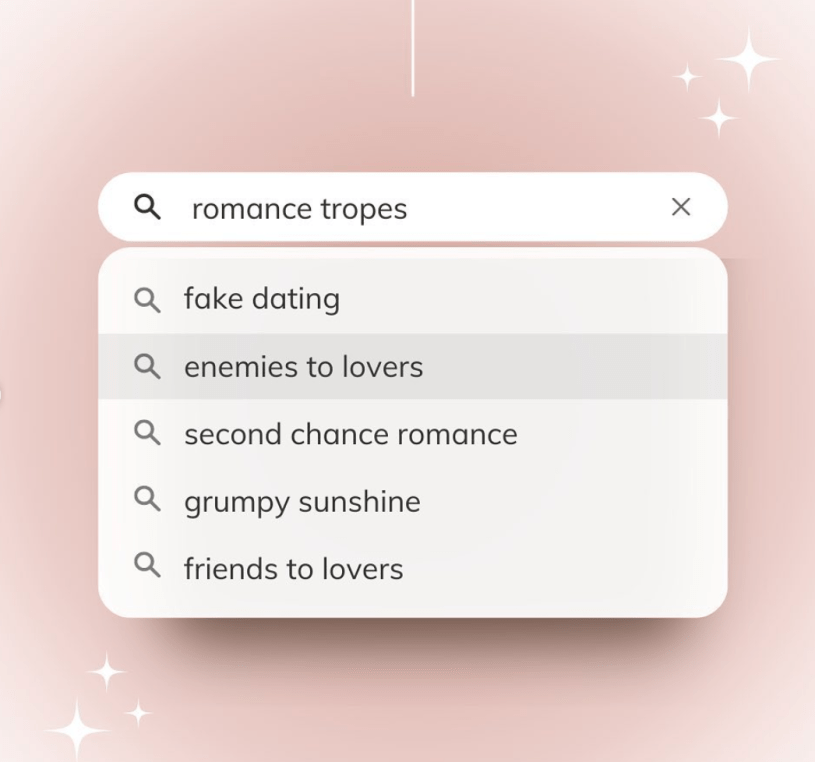
Enemies-to-lovers. Grumpyxsunshine. Fake dating. Friends to lovers. Brother’s best friend. All popular, go-to book tropes that are usually found in one of your favorite romance books. Laura Wood—author of Let’s Make a Scene and speaker at the Edinburgh Women’s Fiction Festival Panel titled “Fine Romance”—asserts that tropes “run parallel to the genre of romance” (2025). Tropes are on the rise due to the romance genre’s increased popularity. Romance is continuously topping global charts and winning awards (Mitchel 2024)—we can’t get enough of it. While the genre has had a “reputation” (Ackermann, 2025) for being “recession-proof” (Daum 2019), the intensity of its dominance in the publishing industry does make you wonder if or when it will fall.

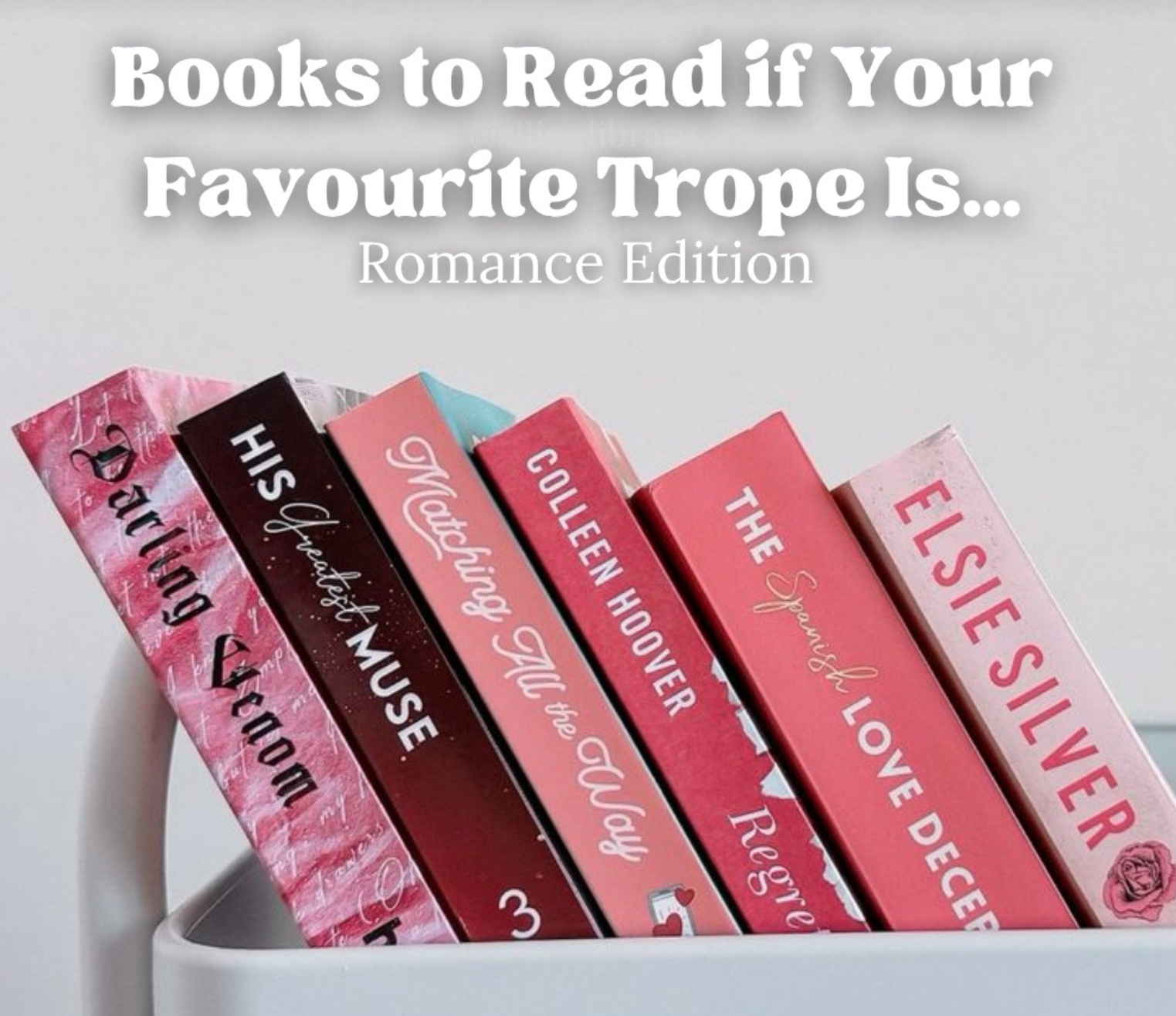
According to Rebecca Ackerman, “romance’s [big] advantage is its flexibility” (2025). Ackerman asserts that Romance is a “broad network of interlinked subgenres, which rises and falls in popularity” (2025). This, in my opinion, is where tropes come into play. Tropes are not only important for authors like Laura Wood in terms of constructing their narratives, but also a means to categorise the monolithic nature of the romance genre. Wood, for example, details how her new book contains the “enemies-to-lovers” trope, as well as “fake dating,” demonstrating the fluidity of the genre and its contents. Creators on BookTok often post book recommendations based on the trope they think the book falls into: The Love Hypothesis by Ali Hazelwood is “fake dating,” while her book Under One Roof is “forced proximity” (allis_library 2025).

Publishing houses have caught on to the trending idea of tropes; Pan MacMillan has a page dedicated to defining the A-Z tropes, while Penguin Random House has a reading list categorised by varying tropes. According to Katie Fraser of The Bookseller, marketing campaigns are starting to reflect the increased use of tropes when talking about books on social media platforms like Booktok. Fraser highlights Booktok creator Suraka’s assertions that publishers know “that if a reader sees their favorite trope in marketing, they are more likely to purchase the book” (2025). While utilizing tropes is evidently an effective marketing strategy for publishers, I think it goes beyond just trying to increase sales for themselves—it is a way to keep the romance genre as a whole trending.
Despite highly saturating the market, romance books continue to top charts due to their adaptability, and the fact that they are easy to categorise. Tropes are a way for publishers to directly filter the wide range of romance titles to readers. Rather than being overwhelmed by the sheer number of choices in the genre, readers can turn to tropes they know they will like (or take a chance on one that they haven’t tried before). Tropes as a marketing trend is both a response to the rise of Romance, and a clever solution to make sure the genre doesn’t run out of content options. While there is always the question of whether tropes themselves will eventually become overdone, the constantly adaptive nature of the romance genre suggests that a new strategy will emerge to keep it alive if that does end up being the case.
Bibliography:
Ackerman, R. (2025). ‘The Publishing Industry’s Most Swoon-Worthy Genre’, The Atlantic. Available at https://www.theatlantic.com/books/2025/10/romance-fiction-genre-open-elite-popularity/684445/. (Accessed 11 October 2025).
Daum, M. (2019). ‘The recession heats up romance novels’, Los Angeles Times. Available at https://www.latimes.com/la-oe-daum4-2009apr04-column.html. (Accessed 10 October 2025).
Fraser, K. (2025). ‘Books on BookTok: tropes should be an entry point, not the full sales pitch”, The Bookseller. Available at https://www.thebookseller.com/books/books-on-booktok-tropes-should-be-an-entry-point-not-the-full-sales-pitch. (Accessed 10 October 2025).
Mitchell, J. (2024). ‘Our romance with romance’, The Bookseller. Available at https://www.thebookseller.com/comment/our-romance-with-romance. (Accessed 10 October 2025).
Penguin Random House Canada (2025) Available at https://www.penguinrandomhouse.ca/list/3532/romance-novels-your-favourite-tropes. (Accessed 10 October 2025)
Soltani, S. (2024). ‘An A-Z of romance tropes’, Pan Macmillan. Available at https://www.panmacmillan.com/blogs/fiction/romance-tropes-a-to-z. (Accessed 11 October 2025).
Wood, L. and Vine, L. (2025). ‘A Fine Romance’, In: Edinburgh Women’s Fiction Festival. 26-27 September 2025. Christ Church Morningside.
Images:
Cover Image: Baileysbookhouse (2023) In @baileysbookhouse ‘romance tropes…’ [Instagram] Available at https://www.instagram.com/p/CocrW1TLS7W/?img_index=1&igsh=dDdyNGhoNjl5NmFv. (Accessed 13 October 2025).
Image 1: Anonymous. Edinburgh Women’s Fiction Festival [Christ Morningside Church] Take 27th September 2025.
Image 2: twins.reading.books and jane.the.reader (2023). In @twins.reading.books and @jane.the.reader ‘ALI HAZELWOOD AUTHOR APPRECIATION…’ [Instagram] 1 June. Available at https://www.instagram.com/p/Cs9oO9Mo87y/?igsh=MXZhYnVqNnJwemtyNA==. (Accessed 13 October 2025).
Image 3: allis_library (2025) In @allis_library Save to you TBR [TikTok] 8 August. Available at https://vm.tiktok.com/ZNdWH96mD/. (Accessed 13 October 2025).
 MSc Publishing – Industry Accredited Postgraduate Degree