
Is Gothic fiction women’s territory?
This is not a question I expected to be asking myself while attending the Edinburgh Women’s Fiction Festival, a celebration of books written by – and for – women. But one panel, We Shall Be Monsters, forced me to reconsider everything I knew about the genre. Listening to authors Mairi Kidd and Sally O’Reilly reclaim figures like Mary Shelley and Lady Macbeth, I realised that Gothic literature has long been a space where women could convey their fears and sense of entrapment.
That made me think that perhaps Gothic is not just a genre women write, maybe it is one we own.

Kidd and O’Reilly transformed familiar Gothic figures into explorations of women’s power and agency. Mairi Kidd’s Poor Creatures examines Mary Shelley as a woman living in the shadows of her famous male contemporaries and even her own creation. Shelley’s life serves as a way to investigate how Gothic literature allowed women to confront societal constraints; meanwhile, Sally O’Reilly’s Hagtale reimagines Lady Macbeth as Wulva, a feral girl raised by witches, giving voice to the perspectives that the original text left unspoken. Both authors highlighted how Gothic writing provides a space for women to grapple with resistance, turning darkness into subversiveness. Listening to them, it became clear that Gothic fiction is a tool through which women assert their presence and reshape narratives.
But why, though?
Their conversation made me wonder why Gothic fiction is a space where women thrive. Secondary research made me realise that the Female Gothic should be considered as an entirely separate entity from its male counterpart; in her 1976 essay, Dr. Ellen Moers defined the Female Gothic as: “The work that women writers have done in the literary mode that […] we have called the Gothic” (Moers, 1976).
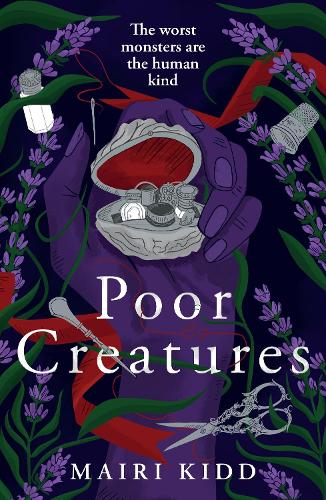
(Bonnier Books Ltd, 2025).
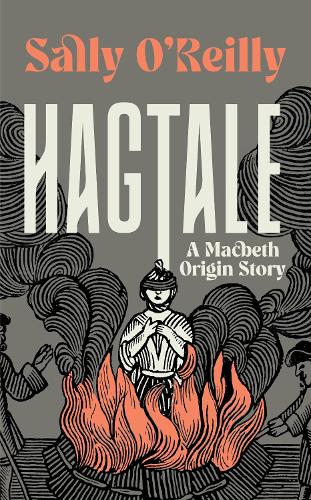
(Scribe, 2025).
However, relegating female Gothic literature to such a simplistic definition feels restricting, because the movement has its own characteristics that differentiate it from male authors. Having risen along with the feminist movement, this genre is highly concerned with women’s struggles, giving space to marginalised voices and trying to reclaim the history of women in literature and society that men in power tried so hard to erase.
It focuses specifically on female terrors, such as childbirth and marriage, but in a way that’s undeniably gothic. This may help explain why the Female Gothic has shown such adaptability to modern contexts: it responded to the needs of a growing female readership, offering narratives that gave voice to their experiences and help them articulate silent struggles.
“I think women are uniquely qualified to write about horror because almost all women are told from childhood that the world is a dangerous place for them.”
Kirsty Logan, author of Things We Say in the Dark.
We Shall Be Monsters convinced me that Gothic fiction is an inherently feminist genre. As O’Reilly states, “Nothing is real but hunger” (O’Reilly, 2025). Applied to the Gothic tradition, this voracity becomes the hunger for voice, for vengeance, for visibility, for independence, that only women possess.
Bibliography
Moers, E. (1976). Literary Women. The Great Writers, New York: Doubleday.
O’Reilly, S. (2025). Hagtale: A Macbeth Origin Story. Scribe Publications.
Penguin.co.uk. (2020). Witches, ghosts and feminism: how female authors are rewriting horror fiction. [online] Available at: https://www.penguin.co.uk/discover/articles/women-horror-fiction-feminist-writing-witches.
Images
Cover Image: The Edinburgh Literary Salon Logo. Taken from: https://www.edwomensficfest.co.uk
Screenshot from the Edinburgh Women’s Fiction Festival Instagram page. (2025). Available at: https://www.instagram.com/edwomensficfest/
Scribe (2025). Cover for Hagtale: A Macbeth Origin Story. Available at https://scribepublications.co.uk/books/hagtale
Bonnier Books Ltd (2025). Cover for Poor Creature by Mairi Kidd. Available at https://www.bonnierbooks.co.uk/books/black-white-publishing/poor-creatures/
 MSc Publishing – Industry Accredited Postgraduate Degree