The Golden Ticket
After seven months of submitting countless applications, I got the email I’d been dreaming of: I had been longlisted for a year-long paid traineeship with a Big Five publisher.
The traineeship, open to all, particularly encouraged applicants from underrepresented communities in the publishing industry. A 2022 Publishers Association report revealed that people from lower socioeconomic backgrounds made up 33% of the industry, people of colour made up 17%, people with a disability made up 16%, and trans people only 1%. This traineeship scheme was a part of a large initiative to improve representation in their company.
Working hard or working class?
Unlike my undergrad which was supported by working part-time, my postgrad has been funded by an education grant that covers all my expenses. This has helped me often throughout the course, allowing me more time to study and to go for every opportunity possible, which I know is not the same for some of my peers. I found that this barrier I am lucky enough to surpass appeared in the selection process for the traineeship. With less than a week’s notice, we were required to attend one-off longlisting and shortlisting sessions. How many people had to pull out of the running because they couldn’t avoid work commitments with such short notice, or lose out on two day’s pay? What about applicants with care responsibilities?
Neuro-what?
There was another part of the process that reflected roadblocks in professional industries. The shortlisting assessment day consisted of a group task, a solo task, and an interview. The tasks presented their own challenges – which is, of course, an important part of assessing candidates – but they seemed stacked against neurodiverse applicants. The solo task was delivered via an email in exam conditions and had a time limit of twenty minutes – simple to some but enormously difficult for those who struggle with processing information and understanding and following instructions. The interview was friendly yet formal, but required knowledge of the STAR method (answering interview questions with a situation, task, action, and result to demonstrate your ability). For people who are unable to read between the lines and pick up unspoken rules, it’s hard to excel in an interview when you don’t know what you’re being assessed on. In a time where just 32% of autistic adults are in paid work, it’s imperative for professional industries to re-evaluate hiring practices which are filled with hidden barriers and unconscious biases.
Despite struggling, I came away from the shortlisting session proud of how hard I’d worked. Fourteen days later I found out I had been accepted into a traineeship at the publisher’s Edinburgh office. I was, and still am, absolutely buzzing.
London (the capital of the world)
Part of the traineeship is a support programme where I’ll get to meet other entry-level individuals across the UK. However, the programme begins with a compulsory day at their office in London. It was taken for granted that I lived in or close to London. From the Society of Young Publishers to the Northern Fiction Alliance, there are many conversations happening about decentralising the industry from London. In the meantime, however, I’ll have to find a way to pay for travel and accommodation if I want to be on the support programme.
Where does this leave us?
The publishing industry has a long way to go regarding inclusion and accessibility. Initiatives like this traineeship are a step in the right direction, but when the very setup of the process contains the same hurdles that it is working to undo, how successful can it be?
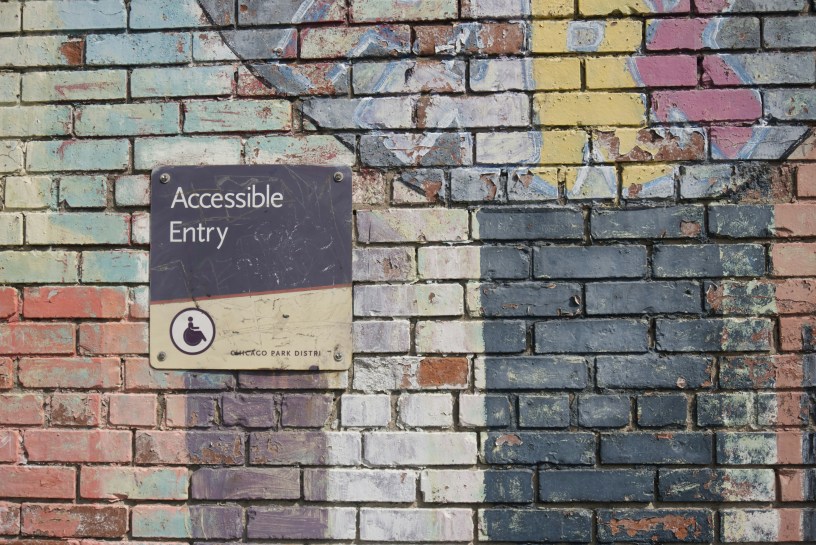
Image: Daniel Ali, via Unsplash. Available at: https://unsplash.com/photos/black-and-white-brick-wall-ju1yFZkrxVg [accessed 10 April 2024].
Bibliography
Northern Fiction Alliance (n.d.) Read our Open Letter and 8 Point Plan challenging the London-centric publishing. Available at: http://northernfictionalliance.com/#:~:text=Founded%20in%202016%20by%20four,spirit%20of%20risk%2Dtaking%20that [accessed 10 April 2024].
Pinkney, S (2023) ‘The UK Publishing Workforce: Diversity, inclusion and belonging in 2022’, Publishers Association, 31 January. Available at: https://www.publishers.org.uk/publications/the-uk-publishing-workforce-diversity-inclusion-and-belonging-in-2022/#:~:text=Key%20findings%20from%20The%20UK,%25%20and%2060%25%20respectively [accessed 10 April 2024].
Society of Young Publishers (n.d.) North. Available at https://thesyp.org.uk/branch/north/ [accessed 10 April 2024].
The National Autistic Society (2016) Too Much Information: The autism employment gap. Available at: https://new.basw.co.uk/sites/default/files/resources/basw_53224-4_0.pdf [accessed 10 April].
 MSc Publishing – Industry Accredited Postgraduate Degree