A sea of waving hands fills the venue as speaker Joseph Coelho asks, ‘who here has a library card?’ an optimistic outcome. ‘And who here has been to the library within the past week?’ only a sprinkling of hands remains. Data on children’s library usage claims that ‘59.6% of children were reported to have visited a public library in the past month and 86.5% were reported to read books with parents at least three times a week’[1], a somewhat hopeful outcome yet the Bookseller Children’s Conference presenters pointed to the notion that although crucial to their communities, libraries are on the decline.
Activities designed to get people into the local libraries were vast and diverse, as Emma Braithwaite describes the environment as an ‘amazing democratic accessible space where you get this really broad spectrum of people from every walk of life going there, everyone is equal. And you don’t get that in many places these days’[2]. The need and concern for these spaces was at the foreground of many speakers’ minds as their unique positioning and ability to affect pragmatic change was explored, ‘with other localized programs and resources, public libraries help overcome impediments to equity in child literacy and health’[3]. If so beneficial, why the regression?
Coelho explores the obstructive perception of libraries many possess, exclaiming the recent development of many libraries waiving late return fees, hosting knit and natter gatherings, Lego clubs, ‘libraries are also a place you can go and weigh your newborn child, where you can change the batteries in your hearing aid […] they are also galleries’[4]. As a society we are acutely aware of all the positive resources these spaces are offering and owe it to the younger generations to keep them afloat.
The type of knowledge children reportedly like to consume varies when at home or school versus the library, another study found that ‘the amount of reading children from poor homes did and their gains in reading achievement over the summer were negatively correlated to the distance they lived from a public library’[5]. It is not just a matter of educational excellence for young people, but libraries also have a role in social mobility and literacy recovery.
‘In a world where libraries and public spaces are dedicated to literature are vanishing the gap between those that can access literature and those who can’t is ever increasing’[6], as pointed out by speaker Sofia Akel. Our duty to sustain and cherish these safe spaces and community hubs was maintained throughout the conference and countless projects and initiatives to accomplish this explored.
Libraries serve as an answer to people’s queries, they are a ‘touchpoint for if someone doesn’t know where to go. You go into the toilets and there were posters about domestic abuse, there were posters on the notice boards about mental health services, libraries are often safe spaces where people feel comfortable’[7]. Outwith being a crucial part of the book industry, these beloved environments deserve more of our attention as their downfall could consequently cause that of the book itself.
[1] Mann, M. et al, (2021), Kindergarten Children’s Academic Skills: Association with Public Library Use, Shared Book Reading and Poverty. Reading psychology. 42 (6), 606–624.
[2] The Bookseller (2023) The Bookseller Children’s Conference. London, 2 October 2023. Available at: https://www.thebookseller.com/broadcast/event-streams/monday-stream-2-sessions–the-bookseller-childrens-conference-2023 (Accessed: 09 October 2023)
[3] Crosh, C. et al, (2022) Inequities in Public Library Branch Access and Children’s Book Circulation in a Midwestern American City. The International Journal of Information, Diversity, & Inclusion. 6 (3), 68–81.
[4] The Bookseller (2023) The Bookseller Children’s Conference. London, 2 October 2023. Available at: https://www.thebookseller.com/broadcast/event-streams/monday-stream-2-sessions–the-bookseller-childrens-conference-2023 (Accessed: 09 October 2023)
[5] Xu, J. et al, (2020), How preschool children think about libraries: Evidence from six children’s libraries in China. Journal of Librarianship and Information Science. 52(2), 428–440.
[6] The Bookseller (2023) The Bookseller Children’s Conference. London, 2 October 2023. Available at: https://www.thebookseller.com/broadcast/event-streams/monday-stream-2-sessions–the-bookseller-childrens-conference-2023 (Accessed: 09 October 2023)
[7] The Bookseller (2023) The Bookseller Children’s Conference. London, 2 October 2023. Available at: https://www.thebookseller.com/broadcast/event-streams/monday-stream-2-sessions–the-bookseller-childrens-conference-2023 (Accessed: 09 October 2023)
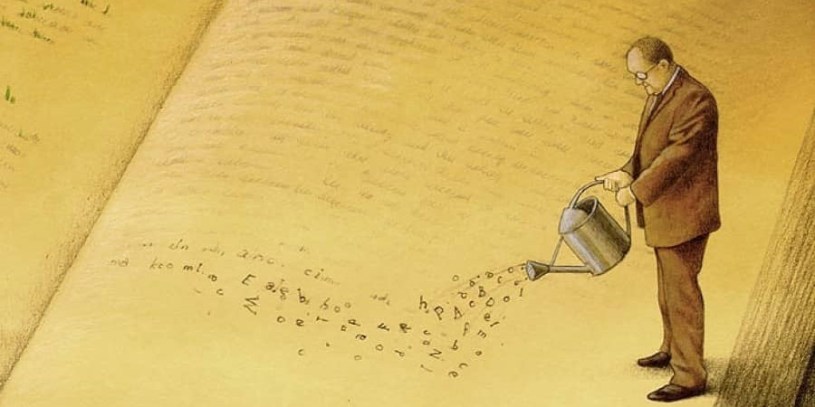
Cover Artwork by Cartoonist Pawel Kuczynski.
 MSc Publishing – Industry Accredited Postgraduate Degree